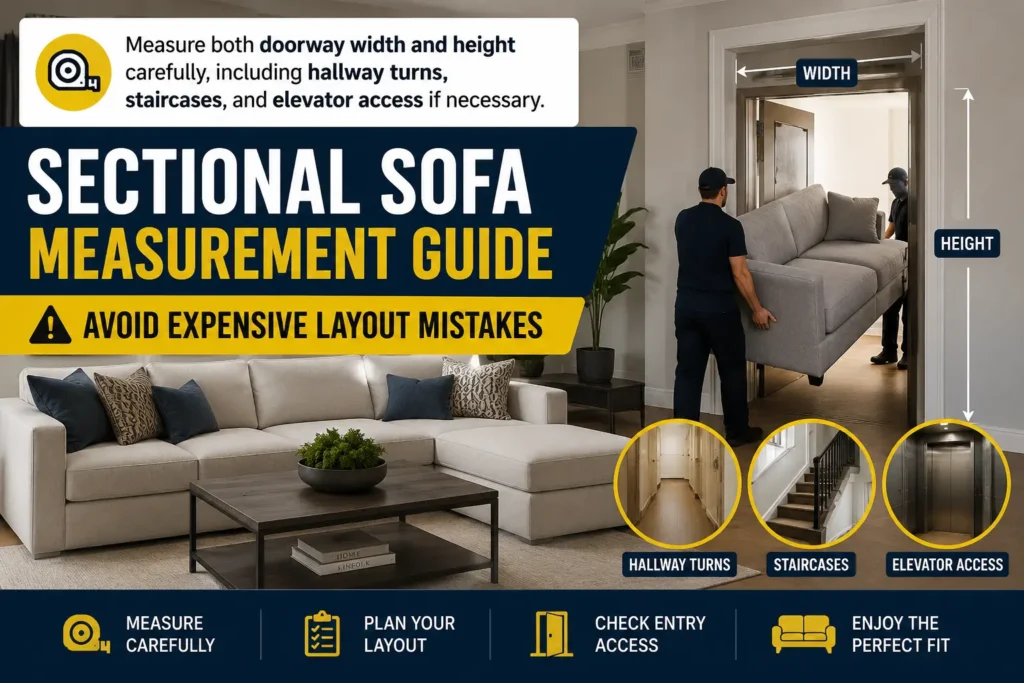
A Practical Sectional Sofa Measurement Guide for Comfortable Everyday Living
Buying a sectional sofa can completely change how a living room feels.
Shopping this fall? Black Friday 2026 falls on November 27. See our Black Friday Sofa Deals 2026 guide for what to expect on sectionals, sleepers and recliners.
The right sectional can make a space feel:
- more comfortable
- more relaxing
- more functional
- and much more inviting for everyday life
But one of the most common furniture mistakes happens before the sofa even arrives.
Many homeowners underestimate how important proper measurements really are.
A sectional may look perfect online or inside a showroom, but after delivery, some people suddenly realize:
- the sofa blocks walkways
- the room feels cramped
- the layout no longer flows naturally
- or worse — the sectional doesn’t fit through the doorway at all
These situations are surprisingly common, especially in apartments or smaller living rooms where every inch matters more than people initially expect.
That’s why measuring carefully before buying usually becomes much more important after everyday living begins than many homeowners realize at first.
In this guide, we’ll explain:
- how to measure for a sectional sofa properly
- common sizing mistakes people regret later
- how much walking space to leave
- sectional sizes for different room types
- and practical layout tips that help living rooms feel more comfortable long-term
Whether you’re shopping for a compact L-shaped sectional, a modular sofa, or a large U-shaped sectional, a little planning beforehand can help avoid expensive frustration later.
Who This Guide Is Helpful For
This guide is especially helpful for:
- apartment homeowners
- first-time sectional sofa buyers
- families redesigning living rooms
- people moving into new homes
- homeowners upgrading from smaller couches
- anyone worried about sectional sizing mistakes
If you’ve ever wondered whether a sectional sofa might feel too large, block movement, or overwhelm your room after delivery, this guide can help you plan much more confidently before buying.
For a complete overview covering sofa comfort, layouts, materials, durability, and long-term buying decisions, our Ultimate Sofa Buying Guide 2026 explains everything in detail.
You can also explore our Best Sofa Fabric for Pets and Kids guide if you’re choosing a sectional for busy family living or homes with pets.
Why Measuring a Sectional Sofa Matters More Than Most People Think
Many people focus first on:
- sofa color
- fabric
- design
- comfort
- or online inspiration photos
But after delivery arrives, room layout and spacing often become much more important than expected.
In many open-concept homes, sectionals often become visual dividers between living, dining, and kitchen areas, which makes sizing and placement even more important for maintaining comfortable room flow.
In real homes, sectional sofas affect:
- walking space
- room balance
- TV viewing comfort
- natural light flow
- nearby furniture placement
- and how open or relaxing the room feels overall
For many people working remotely or spending more time relaxing at home, living rooms now experience heavier daily use than they did a few years ago. That makes layout comfort and furniture spacing even more important for long-term everyday living.
Many homeowners only fully realize this after living with a sectional sofa for several weeks.
A room that feels easy to move around in usually becomes much more enjoyable daily than one that simply looks impressive in photos.
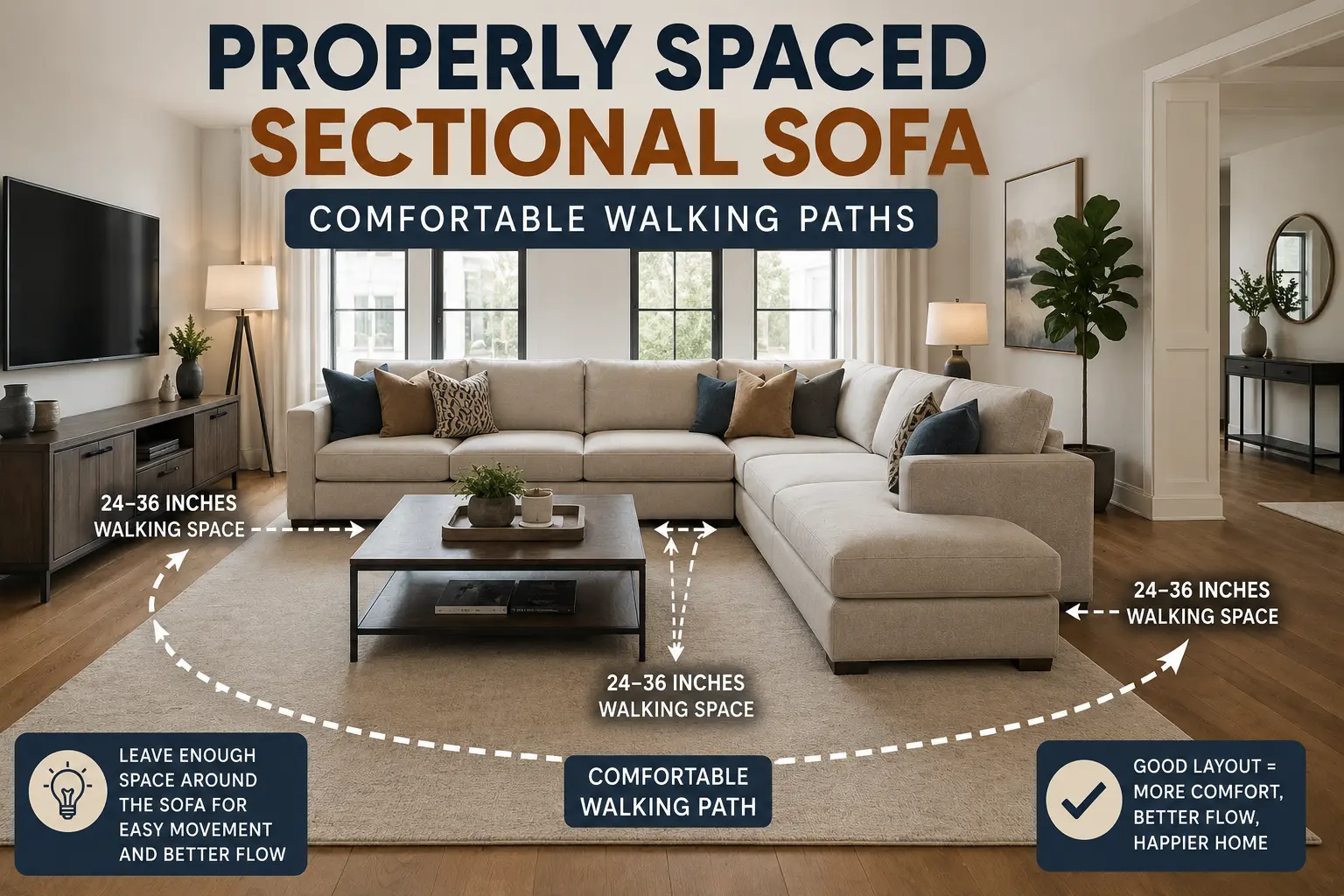
Modern living room showing properly spaced sectional sofa with comfortable walking paths
Common Sectional Sofa Measuring Mistakes
Some furniture mistakes become surprisingly expensive after delivery day.
Common sectional sofa mistakes include:
- choosing oversized sectionals for small rooms
- forgetting doorway measurements
- blocking comfortable walking paths
- placing sofas too close to TVs
- ignoring coffee table spacing
- forgetting staircase clearance
- prioritizing appearance over room functionality
One of the most frustrating furniture experiences is realizing a sectional sofa won’t fit through the doorway after delivery arrives.
Another common problem is buying a sectional that technically fits inside the room but leaves very little comfortable movement space afterward.
In many homes, layout comfort matters much more over time than showroom styling alone.
One common mistake is choosing a sectional mainly based on online photos or social media inspiration without thinking carefully about how the sofa will actually fit into everyday living.
Our Signs of a Low-Quality Sofa guide also explains how poor sofa construction and oversized layouts can slowly reduce long-term comfort after regular use begins.
Many sofa-buying mistakes happen long before delivery day, especially when homeowners focus mostly on appearance instead of practical room planning and comfort. Our Ultimate Sofa Buying Guide 2026 also explains how layout balance and real-world living affect long-term sofa satisfaction.
Many apartment homeowners only fully realize how important room flow becomes after large furniture arrives inside smaller spaces. Our Best Sofa for Small Apartments guide explains how compact sofa layouts can make apartment living feel much more comfortable long-term.
Visual balance matters just as much as physical spacing inside compact living rooms. Our Best Sofa Colors for Small Living Rooms 2026 guide explains how sofa color affects how open or visually crowded smaller spaces feel over time.
What You Need Before Measuring
Before choosing a sectional sofa, gather a few simple things first.
You’ll usually need:
- measuring tape
- paper or phone notes
- room dimensions
- doorway measurements
- staircase measurements if necessary
- and rough furniture layout planning
Taking a little extra time during this stage can prevent major frustration later.
Many homeowners later realize that proper measuring is one of the easiest ways to avoid expensive furniture mistakes before buying.
Step 1: Measure Your Living Room Walls
Start by measuring the full wall length where the sectional may be placed.
This helps you better understand:
- maximum sofa width
- possible sectional layouts
- and how much visual balance the room can comfortably handle
Be sure to account for:
- windows
- side tables
- floor lamps
- radiators
- nearby furniture
- and electrical outlets
Many homeowners focus only on whether the sofa technically fits, but room balance often matters much more after everyday living begins.
In many modern homes, slightly smaller sectionals often create a much more relaxing and open atmosphere long-term.
If you are planning a large seating arrangement, this modular U-shaped sofa guide explains how much space is typically needed for oversized sectionals.
Measuring isn’t just important for sectionals. Before buying any recliner, read our Modern Power Recliner Review to understand the space needed for full reclining.
Step 2: Leave Enough Walking Space
A sectional sofa should never make a room feel difficult to move around in.
In busy family homes, comfortable walking paths usually become much more important after everyday routines begin, especially around coffee tables and entertainment areas.
In many homes, comfortable walking space makes the living room feel:
- calmer
- more open
- less stressful
- and easier to enjoy every day
Try leaving at least:
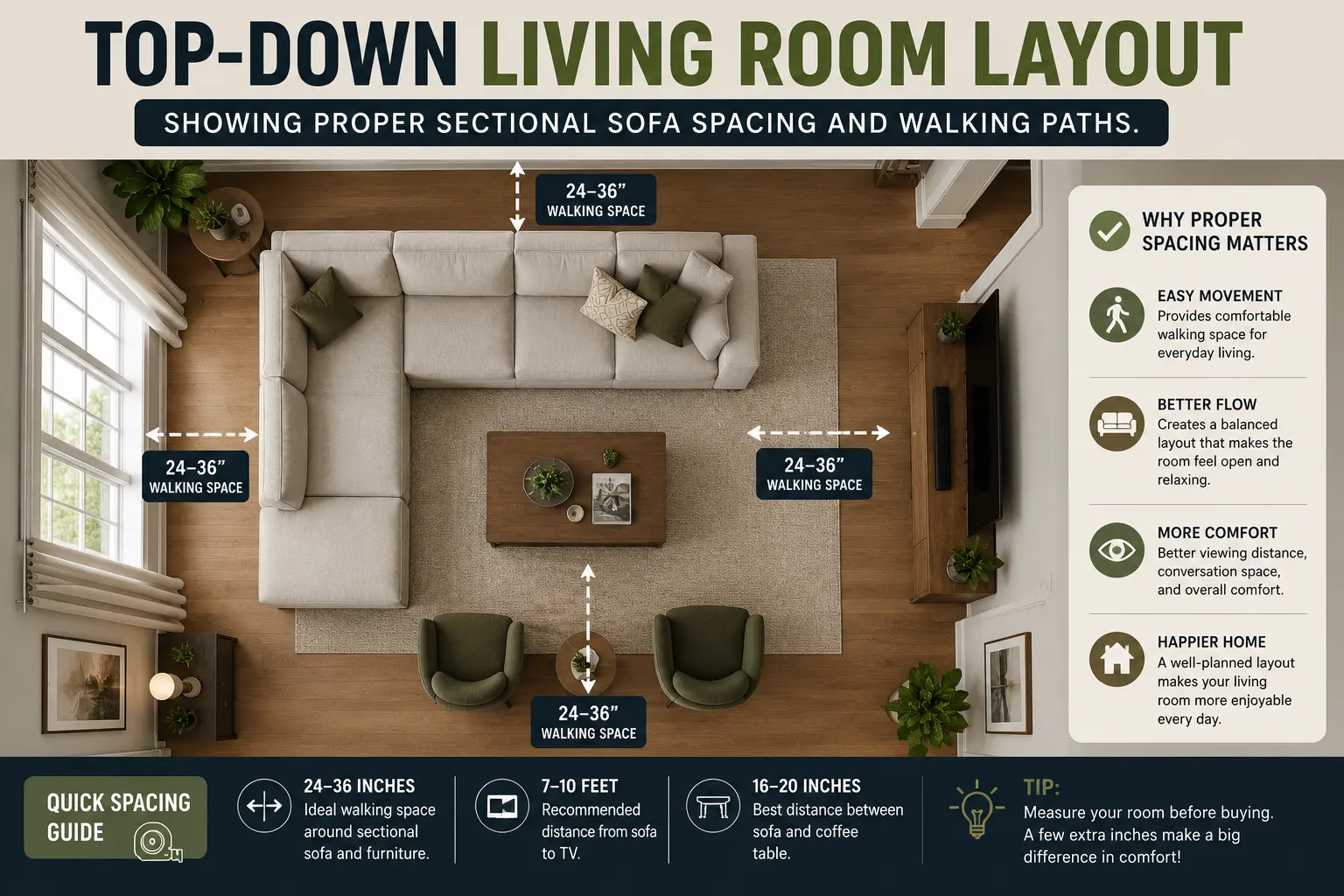
- 24–36 inches of walking space
around major pathways whenever possible.
This becomes especially important in:
- apartments
- open-concept layouts
- family homes with kids or pets
- and smaller living rooms
Oversized sectionals can sometimes overwhelm compact spaces even when measurements technically fit.
If you’re decorating a smaller room, our Make Small Living Room Look Bigger 2026 guide shares practical layout ideas that help living spaces feel brighter and more open.
Ready to see exactly how much space your new sectional will need? Use our quick calculator below to find the ideal sofa width for your room based on the walking space you want to maintain.
Sofa Fit Estimator
Calculate your ideal sofa size based on your wall length and preferred walking path clearance.
Now that you know your ideal size, check out our Best Modern Sectional Sofas for 2026 to find pieces that fit your measurements.
Top-down living room layout showing proper sectional sofa spacing and walking paths
Step 3: Measure Sectional Sofa Depth
Many homeowners measure only sofa width but completely forget about depth.
Sectional depth affects:
- walking room
- coffee table spacing
- TV viewing comfort
- and how open the room feels overall
Deep-seat sectionals may feel extremely comfortable for relaxing movie nights, but they also require noticeably more room space.
For smaller homes, oversized depth can sometimes make layouts feel tighter than expected after daily living begins.
Many homeowners later realize that depth affects room comfort just as much as sofa width.
Step 4: Check TV Viewing Distance
TV distance becomes surprisingly important after regular daily use begins.
If the sectional sits too close:
- movie nights may feel uncomfortable
- neck strain becomes more noticeable
- and the room may feel visually crowded
In many living rooms, balancing sectional size with proper TV distance creates a much more comfortable layout overall.
Comfort during everyday use usually matters much more long-term than maximizing seating size alone.
Step 5: Account for Coffee Tables and Side Furniture
One common measuring mistake is forgetting nearby furniture spacing.
Remember to account for:
- coffee tables
- side tables
- ottomans
- recliners
- storage benches
- and floor lamps
Many homeowners later realize that smaller furniture pieces affect layout comfort much more than expected.
A sectional may technically fit inside the room, but nearby furniture often determines whether the overall layout still feels open and relaxing.
Try Mapping the Sectional Layout Before Buying
Many homeowners find it helpful to map the sectional layout on the floor before ordering.
Using:
- painter’s tape
- cardboard
- newspapers
- or simple furniture outlines
can help visualize how much space the sectional will actually occupy inside the room.
This often makes it easier to notice:
- blocked walkways
- tight corners
- crowded layouts
- or awkward furniture spacing
before making a purchase decision.
Even a few inches can noticeably affect how open and comfortable a living room feels after everyday use begins.
Don’t Forget Doorways and Staircases
This is one of the biggest sectional sofa mistakes homeowners regret later.
A sectional may fit perfectly inside the living room but still fail to:
- fit through the front door
- turn around staircases
- enter elevators
- or move through hallways comfortably
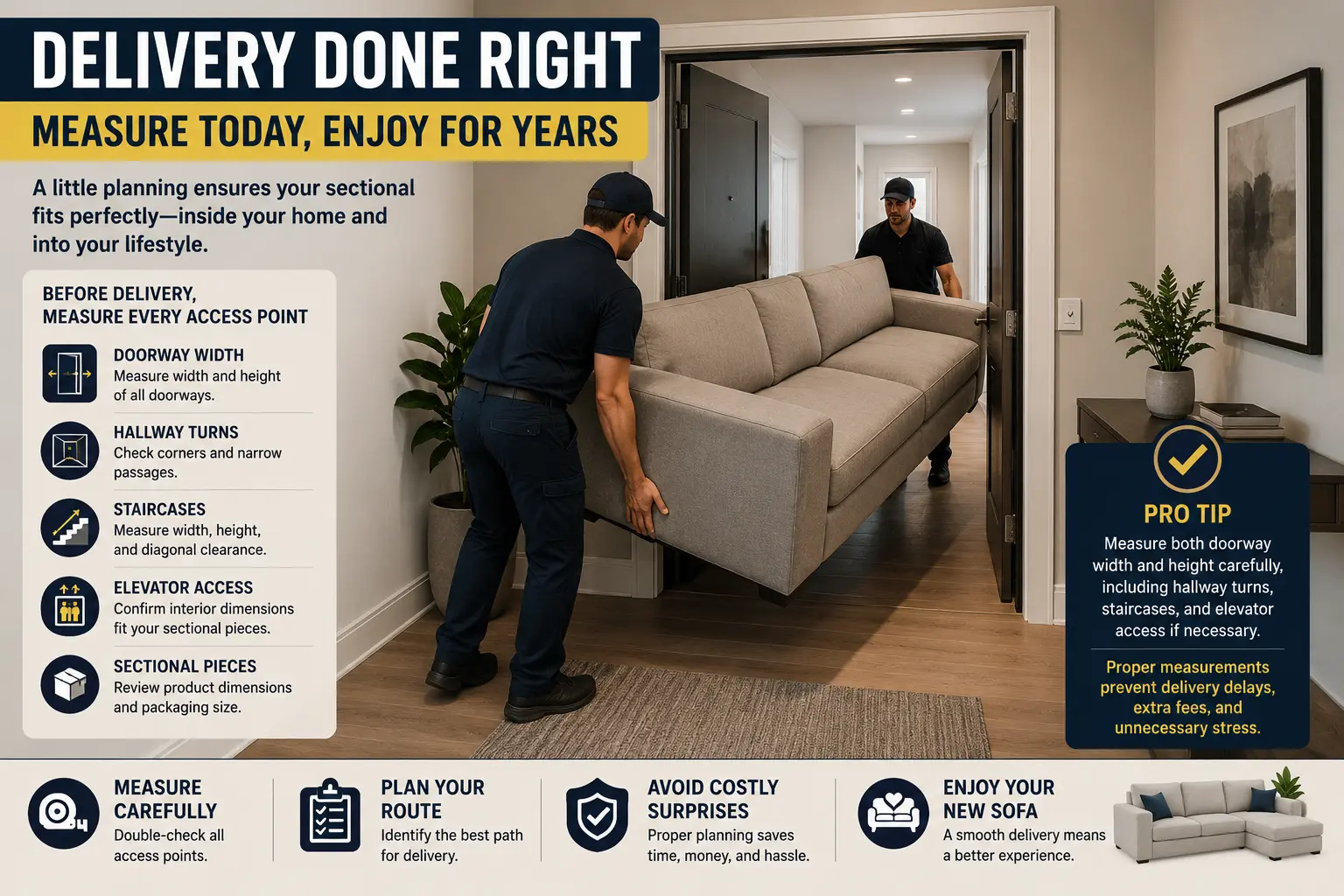
Before buying, always measure:
- doorway width
- hallway width
- staircase turns
- elevator dimensions
- apartment entrances
Many delivery problems happen because buyers focus only on room size without thinking carefully about delivery access.
This becomes especially important for:
- modular sectionals
- oversized U-shaped sectionals
- apartment living
- and narrow staircases
One of the most stressful furniture experiences is waiting excitedly for delivery only to realize the sofa physically cannot enter the home.
Delivery team carefully moving a sectional sofa through a doorway in a modern apartment
Best Sectional Sofa Sizes for Different Room Types
The ideal sectional size depends heavily on room layout and everyday living needs.
| Room Type | Recommended Sectional Size | Best Layout |
|---|---|---|
| Small apartment | 78–90 inches | Compact L-shape |
| Medium living room | 90–110 inches | Standard sectional |
| Large open room | 110+ inches | U-shaped sectional |
In many smaller homes, slightly smaller sectionals often create more comfortable and visually balanced layouts long-term.
A room that feels open and functional usually becomes easier to enjoy every day than one that feels visually overcrowded.
L-Shaped vs U-Shaped Sectionals
Choosing the right sectional shape matters just as much as choosing the right size.
| Feature | L-Shaped | U-Shaped |
|---|---|---|
| Space Saving | Better | Moderate |
| Seating Capacity | Good | Excellent |
| Apartment Friendly | Better | Less ideal |
| Entertaining Guests | Moderate | Excellent |
| Open Layout Feel | Better | Heavier visual presence |
Many apartment owners prefer L-shaped sectionals because they create better room flow while still offering comfortable seating.
For larger open-concept homes, U-shaped sectionals often work better for entertaining guests and larger family gatherings.
You can also explore our Space-Saving Furniture Ideas (2026) guide for more compact living room inspiration and layout ideas.
What Many Homeowners Regret Later
Many homeowners later regret:
- buying oversized sectionals
- blocking natural walking paths
- choosing layouts that overwhelm the room
- ignoring doorway measurements
- prioritizing appearance over functionality
- or selecting deep sectionals for smaller apartments
One common mistake is focusing mostly on how impressive a sectional looks online without fully thinking about how it will actually feel during everyday living.
In many homes, comfortable room flow eventually matters much more than oversized trendy layouts.
Many people are inspired by oversized sectionals seen online or on social media, but those layouts often work better in much larger rooms than homeowners initially realize.
People usually enjoy their living room more when it feels:
- open
- practical
- easy to move around in
- naturally comfortable
- and less visually crowded
A sectional should make everyday living feel easier — not make the room feel harder to use.
Some homeowners also focus heavily on sectional size while overlooking how sofa materials affect long-term comfort and maintenance. In many homes, leather and fabric upholstery can completely change how relaxed, cozy, or practical a sectional feels during everyday living. Our Leather vs Fabric Sofa Guide compares which materials work better for different lifestyles and living spaces.
Many homeowners also discover that oversized sectionals often experience heavier concentrated seating wear over time, especially in smaller living rooms where the same seating areas are used constantly every day. Our How Long Should a Good Sofa Last? guide explains how layout planning, cushion quality, and everyday usage affect long-term sofa comfort and durability.
Best Modular Sectional Sofa Deals • Best Recliner Sofa Deals • Best Sleeper Sofa Deals
View This Week’s Sofa DealsQuick Sectional Sofa Measurement Checklist
Before ordering a sectional sofa, double-check:
- wall measurements
- sofa depth
- walking space
- TV distance
- coffee table clearance
- doorway width
- staircase access
- elevator dimensions
- nearby furniture spacing
Even small planning mistakes can noticeably affect comfort after regular everyday living begins.
Related Sofa Buying Tips
Sectional size matters, but long-term comfort, upholstery quality, and everyday durability matter just as much after regular use begins.
You can also explore:
- Signs of a Low-Quality Sofa
- Best Sofa Fabric for Pets and Kids
- Best Sofa Colors for Small Living Rooms 2026
- Soft Sofas under $300
These guides explain how layout planning, fabric durability, comfort, and practical everyday living all work together when choosing the right sofa.
Shoppers looking for a more budget-friendly option may also want to read our Woyomeub Sectional Sofa Review, where we cover comfort, layout flexibility, assembly, and overall value for everyday living.
Frequently Asked Questions
Most living rooms feel more comfortable with at least 24–36 inches of walking space around major pathways.
If the sofa blocks movement, overwhelms the room visually, or leaves very little open space, it’s probably too large for the layout.
Not always. Leaving small gaps between the sofa and wall can sometimes help rooms feel more open and balanced.
Compact L-shaped sectionals between 78–90 inches often work best for apartments and smaller living rooms.
Measure both doorway width and height carefully, including hallway turns, staircases, and elevator access if necessary.
Always measure the full sectional layout, including chaise extensions, armrests, and reclining sections if applicable. Many homeowners underestimate how much extra space chaise sectionals actually require.
Our Thoughts
A sectional sofa often becomes the center of everyday living much faster than people initially expect.
It’s where families relax after long days, where movie nights happen, where guests gather, and where people slowly settle into everyday routines over time.
Because of that, layout comfort usually matters much more after several months of real living than showroom appearance alone.
In our view, the best sectional sofa isn’t necessarily the biggest one or the trendiest online. The right sectional is the one that fits your room naturally, allows comfortable movement, and continues feeling practical every day.
Many homeowners only fully understand the importance of sizing and spacing after living with a sectional for a while. Things like walking room, TV distance, furniture flow, and delivery access can completely change how enjoyable a living room feels long-term.
A well-measured sectional quietly makes everyday living feel easier, more comfortable, and far more relaxing over time.
Ready to put these measurements into practice? Save time and avoid costly returns by using our sofa size planner to confirm your sectional dimensions before you buy.
Why Trust FurniSavings
At FurniSavings, we focus on creating practical furniture guides designed around real everyday living.
Our content is built to help readers better understand:
- sofa comfort
- sectional layouts
- furniture durability
- living room planning
- modern home trends
- and practical furniture decisions for real homes
We understand that shopping for furniture online can sometimes feel overwhelming, especially with so many sizes, layouts, and design trends available today.
That’s why our goal is to simplify the process with content that feels:
- practical
- realistic
- easy to understand
- and genuinely useful for modern homeowners
Instead of focusing only on trends, we prioritize comfort, functionality, durability, and the way furniture actually fits into everyday life over time.

A dedicated furniture reviewer and home interiors writer with nearly a decade of experience evaluating sofas, bedroom sets, outdoor furniture, and storage solutions. Has reviewed 200+ products from brands including Ashley, Yitahome, and Amazon’s top sellers, helping thousands of U.S. homeowners make smarter buying decisions.