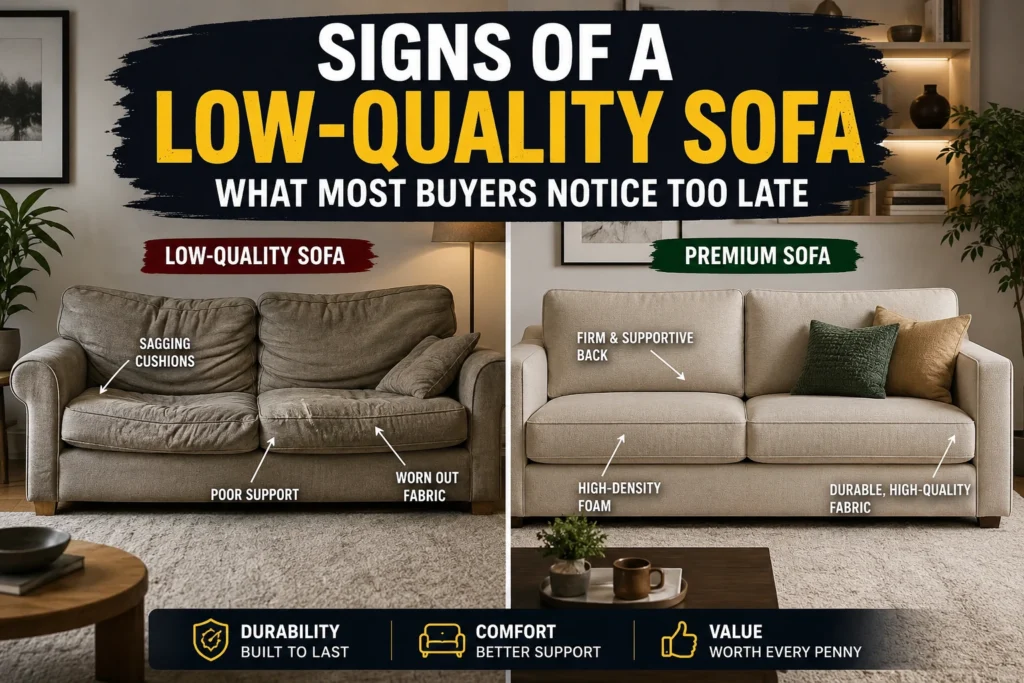
How to Spot Cheap Sofa Materials, Weak Frames, and Comfort Problems Before You Waste Money
Buying a sofa should feel exciting.
Shopping this fall? Black Friday 2026 falls on November 27. See our Black Friday Sofa Deals 2026 guide for what to expect on sectionals, sleepers and recliners.
For many people, it’s one of the biggest furniture purchases in the home — something used every single day for relaxing, spending time with family, watching movies, hosting guests, or simply winding down after long hours of work.
But one of the most frustrating furniture experiences happens when a sofa looks beautiful at first… and slowly becomes uncomfortable only a few months later.
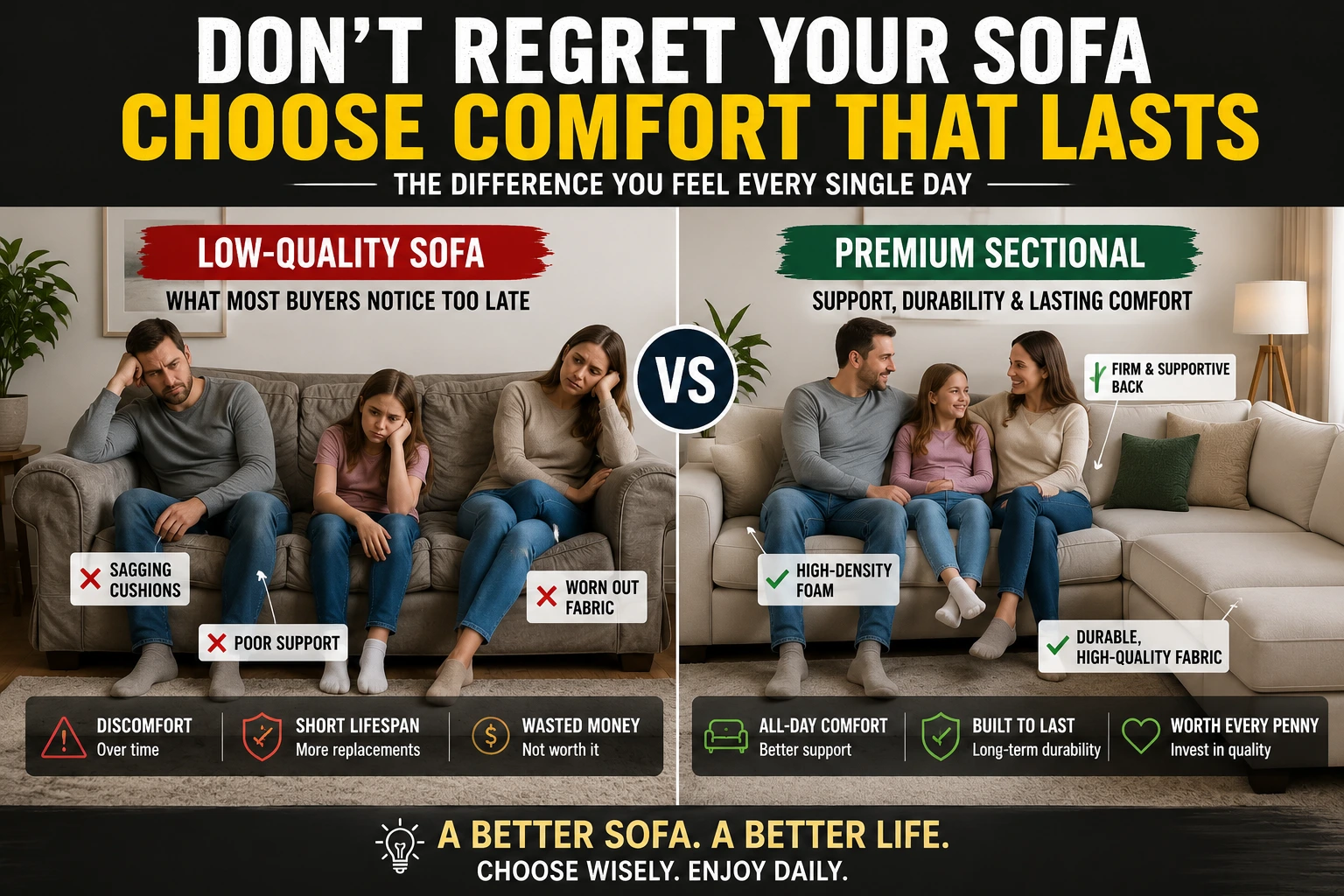
Cushions begin flattening. Fabric starts looking worn. The frame creaks when someone sits down. Support disappears faster than expected. And suddenly, the sofa that looked perfect online no longer feels enjoyable to use every day.
The reality is that many low-quality sofas are designed to look attractive in photos while hiding cheaper construction underneath.
That’s why understanding the signs of a low-quality sofa can help you avoid:
- expensive replacements
- uncomfortable seating
- poor durability
- and long-term buying regret
In this guide, we’ll explain:
- how to identify poor sofa construction
- which materials usually wear out faster
- what quality details buyers often overlook
- and how to choose a sofa that actually feels comfortable long after the excitement of the purchase fades
Whether you’re buying a modular sectional, recliner sofa, apartment couch, or family living room centerpiece, knowing what to check before buying can make a huge difference over time.
Who This Guide Is Helpful For
This guide is especially helpful for:
- first-time sofa buyers
- apartment owners
- families with kids or pets
- homeowners redesigning living rooms
- people comparing cheap vs premium sofas
- anyone wanting furniture that feels comfortable for everyday living
If you’ve ever worried about buying a sofa that looks great online but disappoints later, this guide will help you understand what actually matters before making a long-term decision.
For a more complete overview covering sofa styles, materials, comfort, sizing, and modern living room layouts, our Ultimate Sofa Buying Guide 2026 explains everything in detail.
Why Sofa Quality Matters More Than Most People Realize
A sofa is one of the most heavily used pieces of furniture in most homes.
In many homes, sofas experience far more daily wear than people initially expect. Between relaxing, guests, pets, kids, remote work, and everyday lounging, long-term durability often becomes much more important after the first year of ownership.
People use sofas for:
- relaxing after work
- spending weekends with family
- movie nights
- working remotely
- entertaining guests
- and everyday comfort
Because sofas are used so frequently, low-quality construction often becomes noticeable much faster after regular daily use.
Many buyers initially focus on:
- trendy colors
- online reviews
- appearance
- social media inspiration
- and showroom styling
But over time, practical details usually matter much more than appearance alone.
Things like:
- cushion support
- seat comfort
- frame durability
- upholstery quality
- and long-term comfort
often become the biggest factors after months or years of everyday use.
In busy family homes especially, poor sofa quality tends to become obvious surprisingly quickly.
Family sitting on a sagging sofa while comparing it to a supportive premium sectional.
Weak or Wobbly Sofa Frames
The frame is one of the most important parts of any sofa.
Even high-quality sectionals can feel uncomfortable over time if the room layout feels crowded or difficult to move around in daily. In many homes, proper sofa spacing affects long-term comfort just as much as cushion quality or upholstery materials. Our Sectional Sofa Measurement Guide explains how better room planning can improve everyday living comfort.
Even if cushions and upholstery look attractive initially, weak frame construction can shorten the lifespan of the entire piece of furniture.
Common warning signs include:
- wobbling movement
- creaking sounds
- uneven support
- shifting when someone sits down
- loose armrests
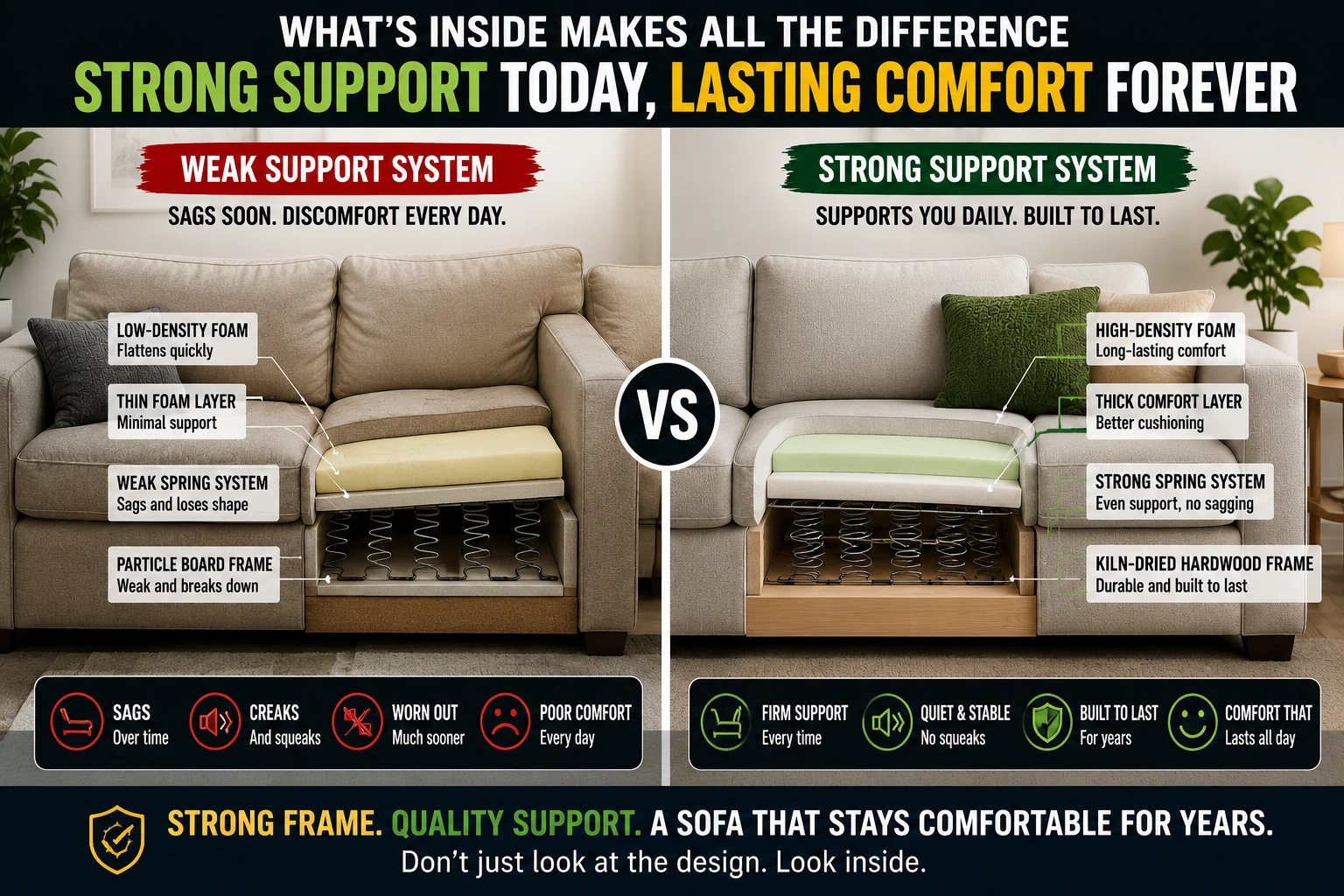
Low-quality sofas often use:
- particle board
- thin plywood
- lower-density engineered wood
Better-quality sofas usually use:
- kiln-dried hardwood
- reinforced solid wood
- stronger support systems
Many homeowners don’t fully notice weak frame construction until the sofa has already been used daily for several months.
Before purchasing a modular U-shaped sofa, inspect the frame construction, connector strength, and cushion density carefully.
To see what quality construction looks like in practice, check out our Modern Power Recliner Review.
Cushions Losing Shape Too Quickly
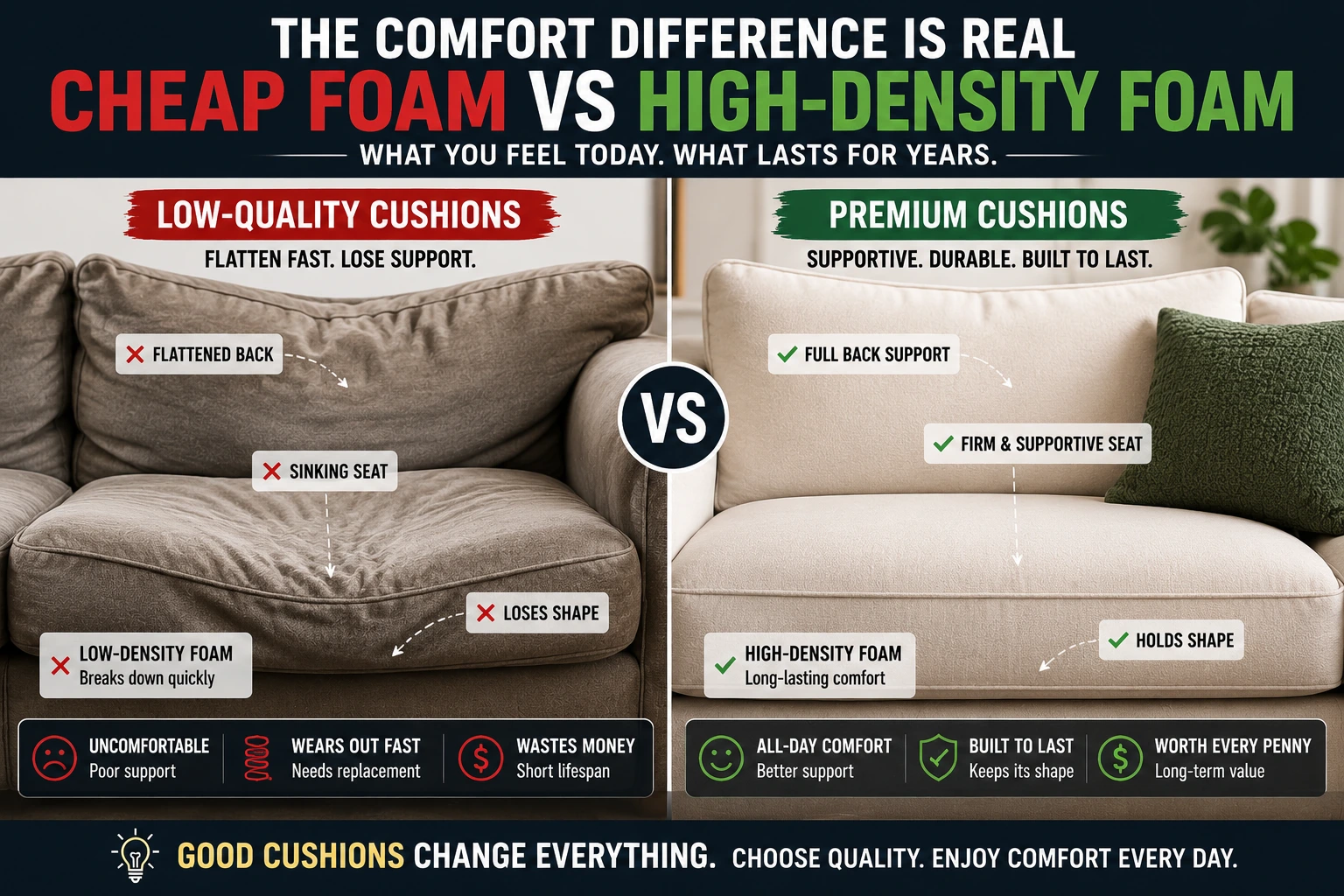
One of the earliest signs of a low-quality sofa is cushions flattening faster than expected.
Some cheaper sofas use low-density foam that:
- loses support quickly
- becomes uneven
- sags over time
- and feels uncomfortable after regular use
At first, softer cushions may feel comfortable in a showroom. But after everyday sitting, weaker foam often struggles to maintain proper support.
Higher-density foam usually performs much better for:
- long-term durability
- consistent comfort
- better shape retention
- and everyday family use
For people spending long evenings on the sofa or working remotely from home, cushion support becomes much more important over time.
You can also read our upcoming guide on sofa cushion fillings and foam density comparisons for deeper comfort insights.
Close-up comparison of flattened sofa cushions vs supportive high-density foam cushions.
Thin Upholstery Fabric That Wears Out Faster
Fabric quality affects both appearance and long-term durability.
Some low-quality sofas use thinner upholstery materials that may:
- pill easily
- attract lint
- tear faster
- fade unevenly
- or struggle with pets and kids
In real homes, upholstery often experiences much more wear than people initially expect.
For homes with pets or young children, performance fabrics have become increasingly popular because they resist:
- stains
- scratches
- moisture
- and heavier everyday use
Many homeowners later realize that easy maintenance and durability matter far more than trendy fabric textures alone.
For homes with pets or young children, upholstery durability becomes even more important after regular daily use begins. Some delicate fabrics may look attractive initially but become difficult to maintain over time. Our Best Sofa Fabric for Pets and Kids guide explains which sofa materials are easier to clean, more durable, and better suited for busy family homes.
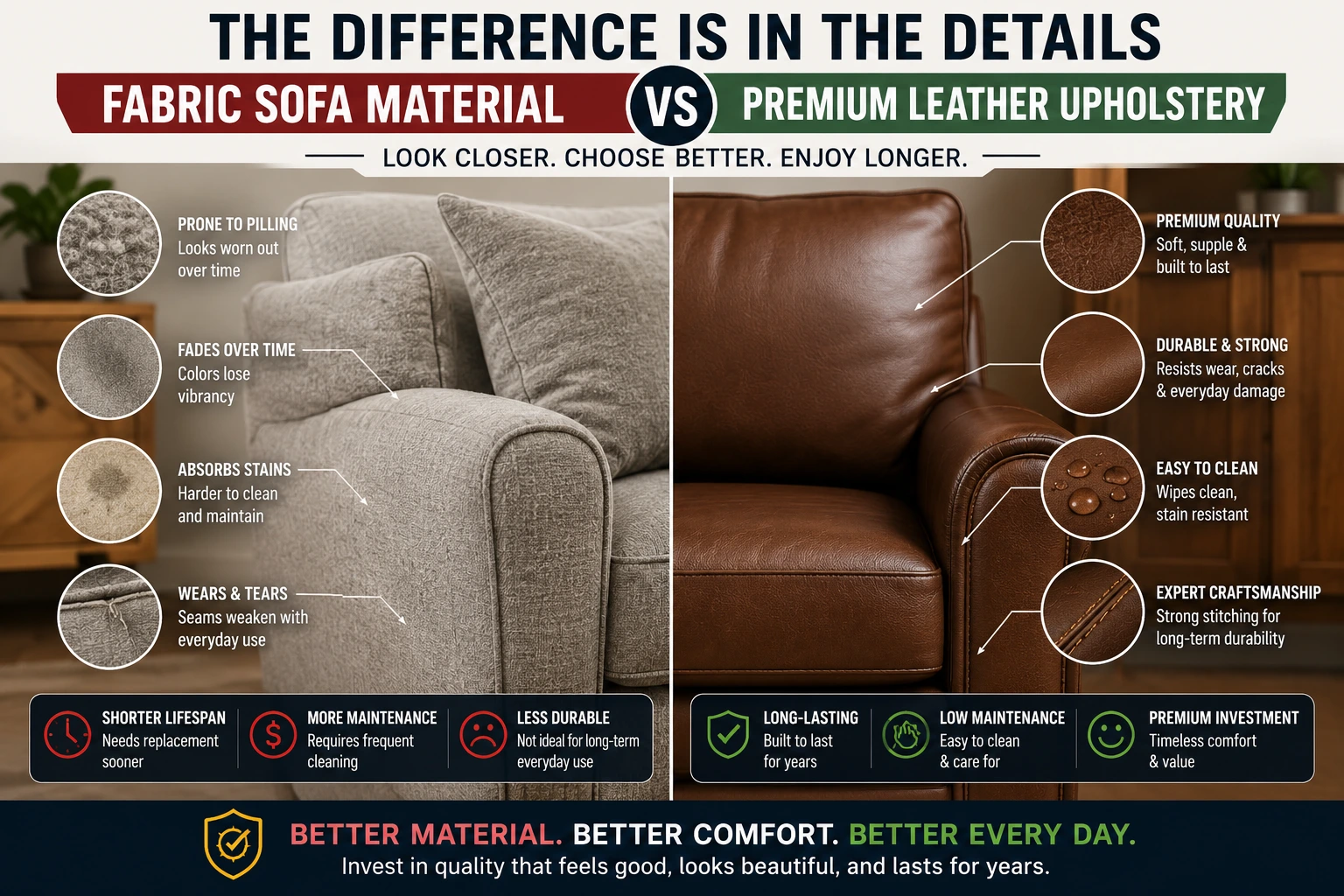
Many homeowners initially focus mostly on sofa appearance, but upholstery material often affects long-term comfort and durability much more after regular use begins. Lower-quality leather may crack or peel over time, while weaker fabric upholstery can flatten, pill, or wear unevenly faster than expected. Our Leather vs Fabric Sofa Guide explains how different sofa materials perform during real everyday living.
Related Reading:
- Best Sofa Colors for Small Living Rooms 2026
- Space-Saving Furniture Ideas (2026)
- Soft Sofas under $300
Poor Stitching Quality
Small details often reveal a lot about overall furniture quality.
Weak stitching may not seem important initially, but over time it can lead to:
- loose seams
- tearing fabric
- damaged cushions
- uneven upholstery wear
Common signs of lower-quality stitching include:
- loose threads
- inconsistent seam lines
- uneven corners
- visible pulling around cushions
Better sofas usually have:
- tighter stitching
- cleaner upholstery finishing
- stronger seam consistency
These details may seem small during shopping, but they often affect long-term durability more than many buyers realize.
Sagging Seat Support
A sofa should still feel supportive after hours of regular use.
Low-quality seat suspension systems often begin sagging much sooner than expected.
Signs of weaker support include:
- sinking seats
- uneven sitting areas
- squeaky springs
- visible seat dips
Good-quality sofas often use:
- reinforced webbing
- sinuous spring systems
- stronger internal seat construction
After daily use over time, proper support becomes one of the biggest differences between a sofa that still feels comfortable and one that quickly feels worn out.
Many homeowners slowly notice their sofa becoming less comfortable long before visible damage appears. Sagging cushions, uneven seating, and weaker support often become more noticeable after several years of regular use. Our How Long Should a Good Sofa Last? guide explains how sofa comfort changes over time and common signs it may be time for a replacement.
Cutaway diagram showing strong sofa spring support vs weak sagging support system.
Cheap Recliner Mechanisms
Modern recliner sofas can be extremely comfortable when built well.
But lower-quality recliner systems often develop problems surprisingly quickly.
Common warning signs include:
- noisy reclining
- jerky movement
- weak footrests
- unstable headrests
- inconsistent motor performance
For people spending more time relaxing at home or working remotely, comfort-focused recliner durability matters much more after months of regular use.
Related Reading:
Oversized Sofas That Don’t Fit Real Living Spaces
One of the most common furniture regrets is buying a sofa that looks beautiful online but overwhelms the room in real life.
In smaller apartments especially, oversized sectionals can:
- reduce walking space
- make rooms feel crowded
- block natural flow
- and create uncomfortable layouts
Many homeowners later realize that choosing the right sofa size often matters more than choosing the trendiest design.
If you’re furnishing compact spaces, our Make Small Living Room Look Bigger 2026 guide shares practical layout tips for creating more open and comfortable living rooms.
What Many Buyers Regret Later
One of the biggest mistakes people make is focusing mostly on appearance without thinking about long-term comfort and practicality.
Many homeowners later realize they focused too heavily on showroom appearance without fully understanding long-term comfort, frame quality, and upholstery durability. Our Ultimate Sofa Buying Guide 2026 explains several practical buying factors that often become much more important after everyday living begins.
One common mistake is relying only on online product photos without paying close attention to material quality, seat depth, frame construction, or customer durability reviews.
Many homeowners later regret:
- oversized sectionals
- difficult-to-clean fabrics
- cushions losing support too quickly
- uncomfortable seat depth
- weak recliner systems
- trendy colors becoming harder to style later
A sofa may look perfect in photos during the first few weeks, but comfort and durability usually matter much more after everyday living begins.
Many homeowners also regret buying oversized sectionals without properly measuring their living room beforehand. A sofa that overwhelms the space or blocks comfortable movement can slowly make the room feel less relaxing over time. Our How to Measure for a Sectional Sofa guide explains how to plan sofa spacing and room layouts more carefully before buying.
Many homeowners also regret choosing delicate upholstery materials without fully thinking about cleaning difficulty, pet hair visibility, or long-term maintenance. For families with pets or kids, practical fabric choices often become much more important after everyday living begins. Our Best Sofa Fabric for Pets and Kids guide shares practical upholstery recommendations for real homes.
Some homeowners also regret choosing sofa materials mainly based on showroom appearance without fully considering comfort, maintenance, or everyday practicality. In many homes, upholstery texture, cleaning effort, and daily comfort eventually matter much more than expected. Our Leather vs Fabric Sofa Comparison Guide explains the pros and cons of both materials for real everyday living.
Some homeowners also regret buying cheaper sofas that lose support much faster than expected after everyday living begins. In many homes, long-term comfort and durability eventually matter much more than trendy styling alone. Our Sofa Lifespan Guide explains how quality construction affects long-term sofa comfort and durability.
What People Often Prioritize Too Late
Many buyers don’t fully think about:
- fabric durability
- cleaning difficulty
- room flow
- layout flexibility
- cushion support
- seat depth
- long-term comfort
These details may seem minor at first, but they often become the biggest daily frustrations later.
For many modern homes, practicality and comfort usually matter far more over time than temporary design trends.
Fabric vs Leather Sofa Comparison
Many homeowners compare fabric and leather sofas based on:
- comfort
- durability
- maintenance
- pets
- climate
- and everyday practicality
The best choice usually depends on how the sofa will actually be used in real daily living.
| Feature | Fabric Sofa | Leather Sofa |
|---|---|---|
| Comfort Feel | Soft and cozy | Smooth and supportive |
| Maintenance | Moderate | Easier cleaning |
| Pet Friendliness | Depends on fabric | Can scratch easily |
| Style | Warm and casual | Modern and premium |
| Best For | Family homes | Luxury interiors |
In homes with kids or pets, easy cleaning and durability often become much more important than showroom appearance over time.
Close-up comparison of fabric sofa material and premium leather upholstery.
Sofa Cushion Comparison Guide
Different cushion fillings create very different comfort experiences.
Some people prefer softer sink-in seating for relaxing movie nights, while others prefer firmer support that maintains shape longer during everyday use.
| Cushion Type | Comfort Feel | Durability | Maintenance | Best For |
|---|---|---|---|---|
| High-Density Foam | Balanced and supportive | Excellent | Low | Everyday family use |
| Feather Down | Soft and sink-in comfort | Moderate | High | Luxury comfort |
| Memory Foam | Pressure-relieving support | Very Good | Moderate | Long sitting sessions |
Many people initially focus on sofa appearance, but long-term comfort usually becomes far more important after regular everyday use.
Quick Sofa Quality Inspection Tips
When testing a sofa in-store or after delivery, try checking:
- whether the frame creaks during movement
- how quickly cushions bounce back after sitting
- if seams feel tight and evenly stitched
- whether armrests feel stable
- how supportive the sofa feels after sitting for several minutes
Many quality problems become easier to notice when buyers slow down and pay attention to smaller construction details.
Sofa Buying Checklist Before You Order
Before ordering a sofa, it’s worth slowing down and checking a few important details carefully.
Even a high-quality sofa will feel uncomfortable if it’s the wrong size for your room. Use our sofa size calculator to find the perfect dimensions before you invest in your next piece.
A little extra attention during shopping can often prevent expensive regret later.
Before buying, make sure you:
- measure your room carefully
- check doorway and staircase clearance
- test seat comfort and cushion support
- inspect frame stability
- compare upholstery durability
- think about cleaning difficulty
- consider pets or children
- review warranty coverage
- and prioritize long-term comfort over short-term trends
In many real homes, practical comfort matters much more after everyday living begins than showroom styling alone.
Frequently Asked Questions
A good-quality sofa usually has:
strong frame construction
supportive cushions
durable upholstery
consistent stitching
and stable seat support.
Sofas with kiln-dried hardwood frames, high-density foam cushions, and durable upholstery fabrics usually last the longest.
Budget sofas can work well for temporary living situations, but many lower-quality models lose support and comfort much faster after regular daily use.
High-density foam is often one of the best choices for balancing durability, comfort, and long-term support.
A well-made sofa can often last between 7–15 years depending on materials, maintenance, and daily usage.
Best Modular Sectional Sofa Deals • Best Recliner Sofa Deals • Best Sleeper Sofa Deals
View This Week’s Sofa DealsOur Thoughts
A sofa usually becomes much more important in everyday life than most people initially expect.
It’s where families gather after long days, where people relax quietly during weekends, where guests sit during conversations, and where many everyday moments naturally happen over time.
Because of that, long-term comfort and durability usually matter much more than trendy designs or perfect showroom styling.
Many homeowners only fully understand what matters after living with a sofa for several months. Things like seat depth, cushion support, fabric durability, and frame quality can completely change how comfortable a sofa feels during everyday use.
In our view, the best sofa isn’t necessarily the most expensive one or the most popular online. The right sofa is the one that fits your lifestyle naturally, feels comfortable daily, and continues working well for your space over the years.
Taking extra time to understand materials, construction quality, comfort, and practicality can help you avoid common buying regrets and choose furniture that genuinely feels good to live with every day.
A comfortable sofa quietly becomes part of everyday life in ways people often don’t fully notice until they finally find one that genuinely works well for their home.
Why Trust FurniSavings
At FurniSavings, we focus on creating practical furniture guides designed around real everyday living.
Our content is built to help readers better understand:
- sofa comfort
- furniture durability
- material comparisons
- living room layouts
- small-space furniture solutions
- and modern home trends that actually work in real homes
We understand that shopping for furniture online can sometimes feel overwhelming, especially with so many designs, marketing claims, and conflicting reviews available today.
That’s why our goal is to simplify the process with content that feels:
- practical
- realistic
- easy to understand
- and genuinely useful for everyday homeowners
Instead of focusing only on trends, we prioritize comfort, functionality, durability, and the way furniture actually fits into daily life over time.

A dedicated furniture reviewer and home interiors writer with nearly a decade of experience evaluating sofas, bedroom sets, outdoor furniture, and storage solutions. Has reviewed 200+ products from brands including Ashley, Yitahome, and Amazon’s top sellers, helping thousands of U.S. homeowners make smarter buying decisions.