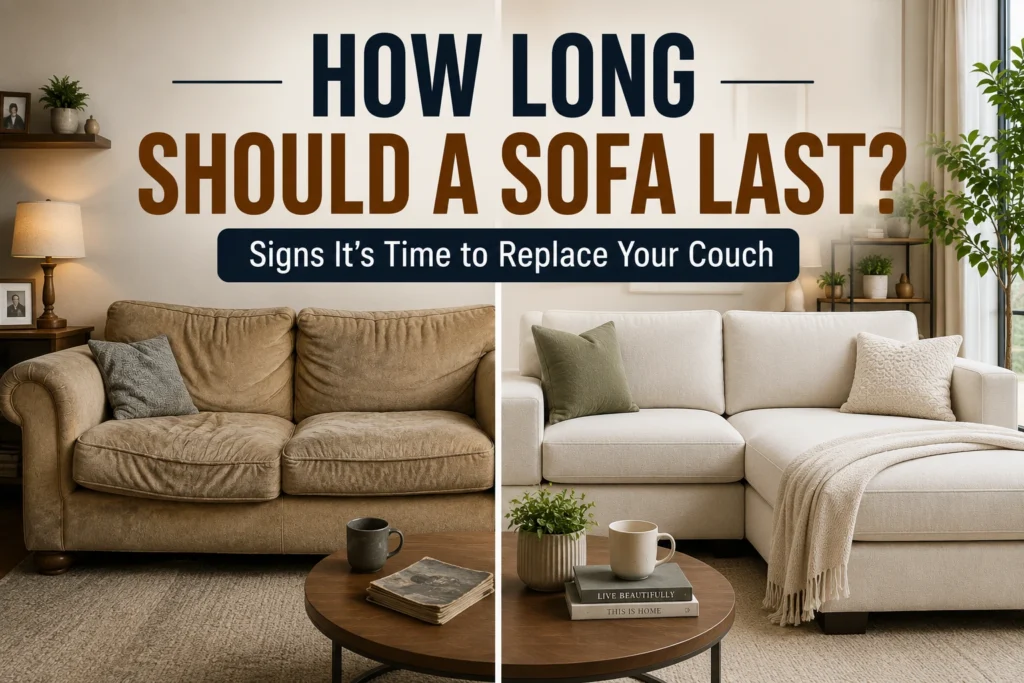
Signs It’s Time to Replace Your Couch
A sofa quietly becomes part of everyday life much faster than most people initially expect.
Shopping this fall? Black Friday 2026 falls on November 27. See our Black Friday Sofa Deals 2026 guide for what to expect on sectionals, sleepers and recliners.
It’s where:
- families relax after long days
- movie nights happen
- pets curl up and sleep
- guests gather during weekends
- and people slowly settle into familiar daily routines over time
Because sofas are used so often, comfort and durability usually matter much more after several years of real living than perfect showroom styling alone.
Many homeowners initially focus mostly on:
- trendy colors
- soft cushions
- stylish layouts
- or beautiful online inspiration photos
But after everyday use begins, practical details slowly become much more important.
Things like:
- sagging cushions
- weaker support
- visible fabric wear
- creaking frames
- and overall comfort changes
can completely affect how relaxing and enjoyable a living room feels over time.
Some homeowners also notice increased neck, shoulder, or lower back discomfort after sitting on older sofas for longer periods, especially once cushions lose proper support over time.
Some sofas continue feeling supportive and comfortable for many years.
Others slowly lose comfort much faster than homeowners originally expected.
In this guide, we’ll explain:
- how long a good sofa should usually last
- what affects sofa lifespan
- signs it may be time for a replacement
- how to make a sofa last longer
- and what many homeowners regret later
Whether you own a sectional sofa, leather couch, or family fabric sofa, understanding long-term durability can help you make smarter furniture decisions moving forward.
Sometimes it’s easier to sit back, relax, and listen.
We created a quick audio version of this guide so you can learn about sofa lifespan, comfort, and replacement signs while relaxing at home, working, or multitasking.
🎙️ Audio Summary
How long should a good sofa last? Learn the biggest signs it may be time to replace your couch, what affects sofa durability, and how to make your sofa stay comfortable for years.
Tip: You can listen while browsing furniture ideas or relaxing at home.
Who This Guide Is Helpful For
This guide is especially helpful for:
- homeowners replacing older sofas
- first-time sofa buyers
- families with kids or pets
- apartment homeowners
- people frustrated with sagging cushions
- anyone comparing sofa durability
If you’ve started noticing your sofa feels less comfortable than it used to, this guide can help you understand whether normal wear is expected or if it may be time for a replacement.
For a complete overview covering sofa comfort, layouts, durability, materials, and buying advice, our Ultimate Sofa Buying Guide 2026 explains everything in detail.
Why Sofa Lifespan Matters More Than Most People Think
Many people don’t think much about sofa lifespan until comfort slowly starts changing.
Long-term sofa durability often depends on decisions homeowners make before buying, including cushion density, frame construction, upholstery quality, and overall sizing. Our Ultimate Sofa Buying Guide 2026 explains many of the comfort and quality factors that affect long-term furniture satisfaction.
At first, wear usually happens gradually:
- cushions flatten slightly
- support feels weaker
- seating becomes uneven
- or back comfort slowly decreases
Over time, those small changes can noticeably affect how relaxing the living room feels every day.
A sofa that creaks, shifts, or sinks unevenly often changes the entire atmosphere of a room more than homeowners initially expect.
In many homes, sofas are used daily for:
- relaxing
- remote work
- family gatherings
- TV watching
- and long sitting sessions
Because of that, durability usually matters much more long-term than appearance alone.
Many homeowners only fully realize this after living with a sofa for several years.
In smaller apartments especially, sofas often become the center of the room visually and functionally, which makes long-term comfort even more noticeable after daily use begins.
Long-term sofa satisfaction often depends on emotional comfort as much as physical comfort. Our Best Sofa Colors for Small Living Rooms 2026 guide explains how sofa color affects visual comfort and everyday room atmosphere over time.
Frame quality and cushion density are especially important when evaluating a large modular U-shaped sectional sofa and Soft Sofas under $300.
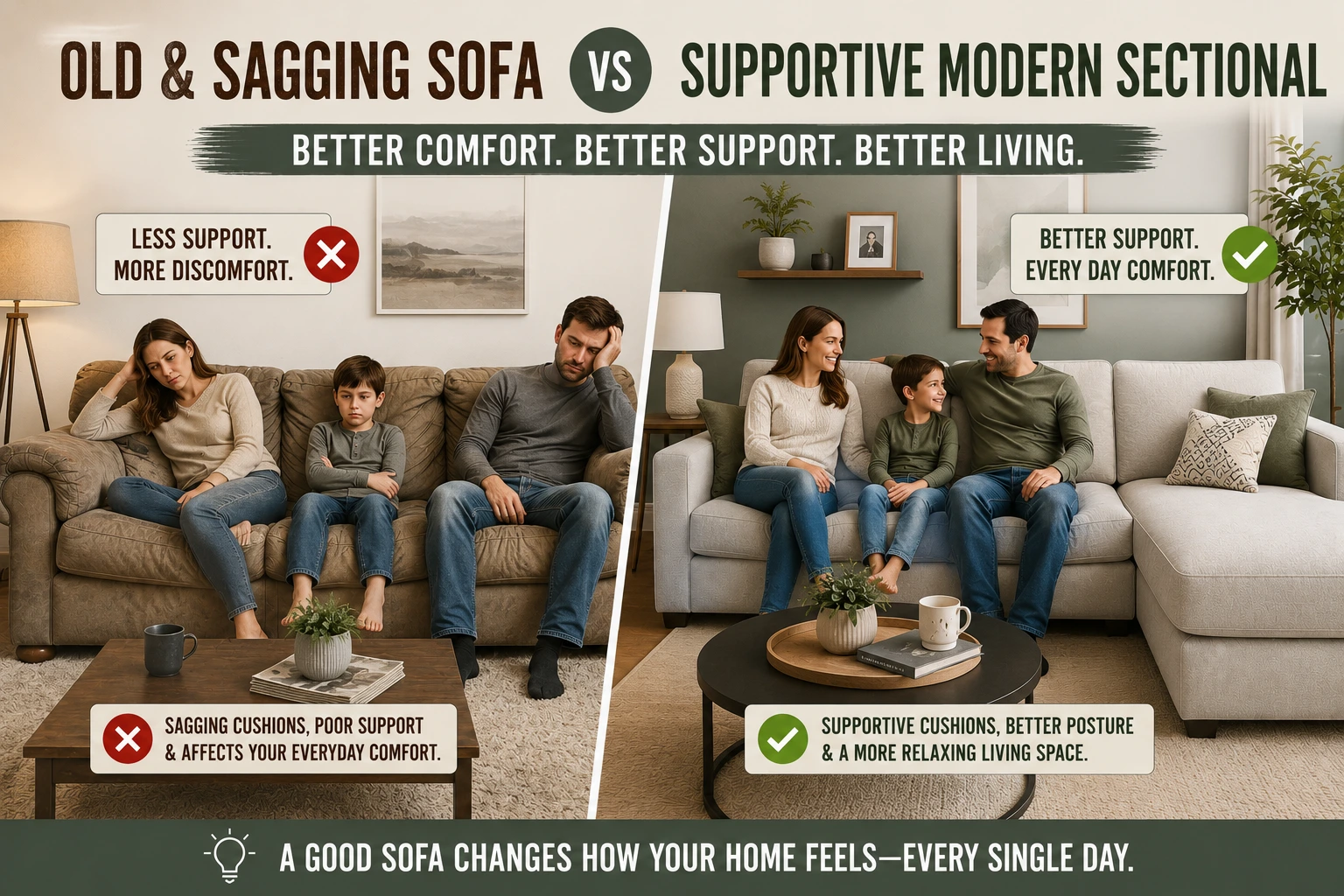
Family sitting on an older sagging sofa compared beside a supportive modern sectional
How Long Does a Good Sofa Usually Last?
A good-quality sofa can often last:
- 7–15 years
depending on:
- frame quality
- cushion density
- upholstery material
- daily usage
- and maintenance habits
Lower-quality sofas sometimes begin losing comfort much faster than expected, especially in busy homes with heavy daily use.
Higher-quality sofas built with:
- durable frames
- supportive cushions
- and stronger upholstery
usually maintain comfort and structure much longer.
In many homes, the difference between a sofa lasting 4 years versus 12 years often comes down to construction quality rather than appearance alone.
Many homeowners later realize that long-term comfort usually feels far more valuable than replacing cheaper furniture repeatedly every few years.
Average Sofa Lifespan by Material
| Sofa Type | Average Lifespan |
|---|---|
| Low-quality sofa | 3–5 years |
| Mid-range fabric sofa | 7–10 years |
| High-quality leather sofa | 10–15 years |
| Performance fabric sectional | 8–12 years |
Many homeowners later discover that investing slightly more in durability upfront often creates better comfort and long-term value over time.
What Affects Sofa Lifespan?
Several important factors affect how long a sofa continues feeling comfortable and supportive.
Apartment homeowners often notice sofa comfort much more quickly because compact layouts make furniture feel more visually dominant during everyday living. Our Best Sofa for Small Apartments guide explains how balanced sofa sizing can improve long-term apartment comfort.
Frame Quality
The frame is one of the most important parts of any sofa.
Weak frames may:
- creak
- wobble
- shift unevenly
- or lose stability over time
A strong frame usually helps the sofa maintain better support during years of everyday use.
Our Signs of a Low-Quality Sofa guide explains how weak construction often becomes noticeable much faster after regular living begins.
Small noises, shifting, or frame movement often become more noticeable during quiet evenings at home once a sofa begins losing structural support.
Cushion Density
Many homeowners slowly notice their sofa becoming less comfortable long before obvious damage appears.
Low-density cushions often:
- flatten faster
- lose support
- and create uneven seating
Higher-density foam cushions usually maintain comfort much longer during everyday use.
Comfort changes often happen gradually, which is why many people don’t immediately realize how much sofa support has declined over time.
A sofa that once felt cozy can slowly become less relaxing without homeowners fully noticing the change at first.
Upholstery Material
Leather and fabric materials age differently over time.
Some upholstery materials resist:
- stains
- fading
- wear
- and pet hair
better than others.
High-quality leather often develops a softer lived-in appearance over time, while durable fabric sofas usually maintain a warmer and more casual feel after years of everyday living.
You can also explore our Leather vs Fabric Sofa Guide to compare durability, comfort, maintenance, and long-term practicality between both materials.
Daily Usage
Sofas used heavily every day naturally experience faster wear.
In busy family homes:
- cushions compress faster
- fabrics wear more quickly
- and seating support changes sooner
For people working remotely or spending longer hours relaxing at home, sofa comfort usually becomes much more important after regular extended use begins.
Pets and Kids
Homes with pets or children usually place heavier daily stress on sofas.
Things like:
- scratches
- spills
- pet hair
- jumping
- and stains
can noticeably affect upholstery durability long-term.
That’s why practical upholstery materials often matter much more after real everyday family living begins.
Our Best Sofa Fabric for Pets and Kids guide explains which sofa materials usually perform best for busy homes and everyday family comfort.
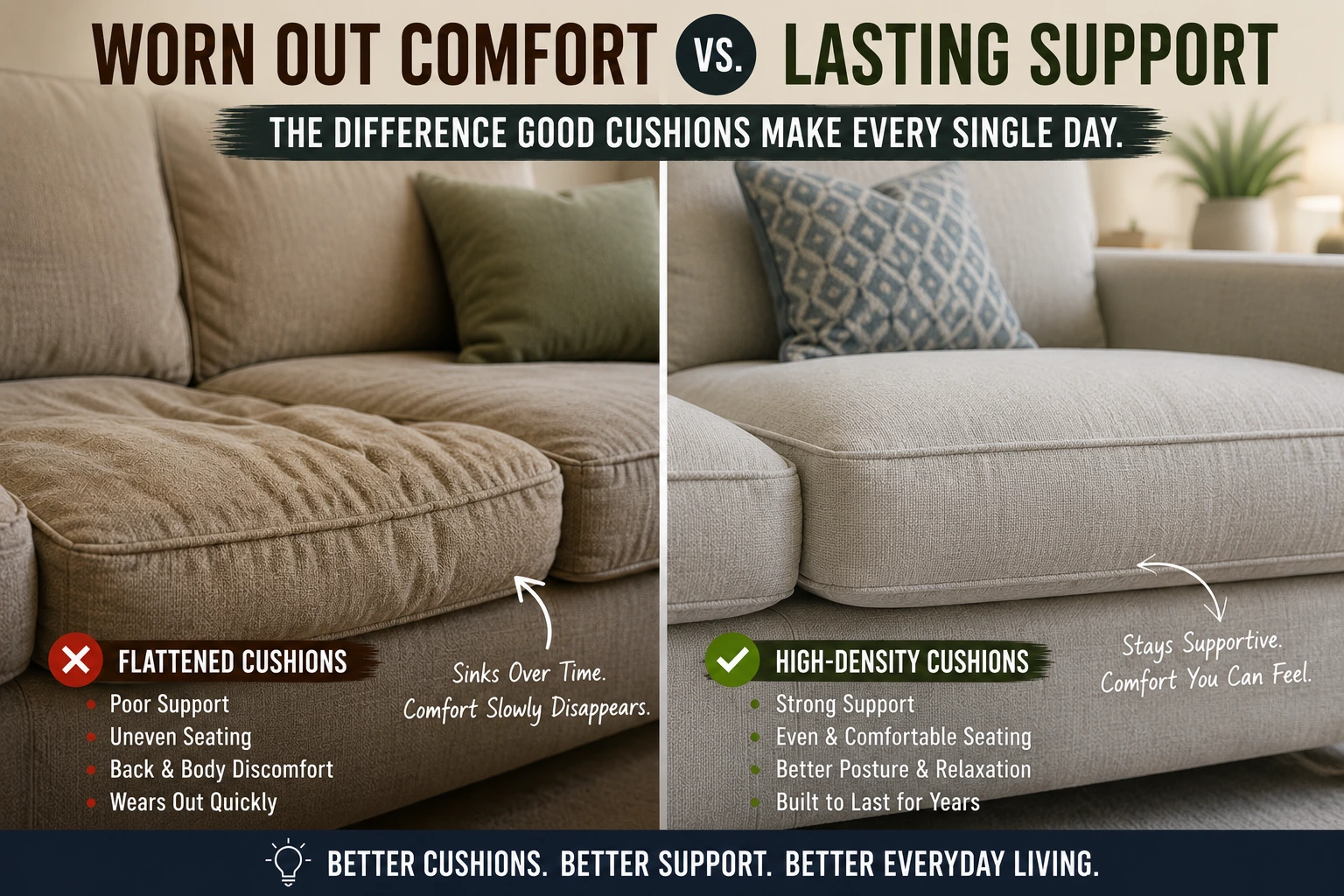
Close-up comparison of flattened sofa cushions versus supportive high-density cushions
Signs It’s Time to Replace Your Sofa
Many homeowners slowly adjust to sofa discomfort over time without realizing how much comfort has actually declined.
Common signs it may be time for a replacement include:
- sagging cushions
- creaking frames
- visible upholstery wear
- uneven seating
- weaker support
- back discomfort
- and layouts that no longer fit the room comfortably
Sometimes the sofa still looks acceptable visually, but everyday comfort has already changed significantly.
In many homes, poor sofa support slowly affects:
- relaxation quality
- posture
- movie nights
- family comfort
- and overall living room enjoyment
much more than expected.
One of the biggest signs homeowners notice is when they stop looking forward to relaxing on the sofa the same way they once did.
Signs Your Sofa May Need Replacing
| Sign | What It Usually Means |
|---|---|
| Sagging cushions | Foam breakdown |
| Creaking frame | Weak structure |
| Fabric pilling | Upholstery wear |
| Uneven seating | Support damage |
| Back pain after sitting | Poor comfort support |
Even small comfort problems can noticeably affect daily relaxation after long-term use begins.
Leather vs Fabric Sofa Durability
Both leather and fabric sofas can last many years when built with quality materials.
Leather sofas are often easier to:
- wipe clean
- maintain daily
- and resist odor buildup
Fabric sofas usually feel:
- softer
- warmer
- and cozier for everyday lounging
However, upholstery quality matters much more than material alone.
A poorly made leather sofa may wear out faster than a well-built fabric sectional with supportive cushions and durable upholstery.
Many homeowners initially focus heavily on material choice without fully considering frame strength, cushion density, or long-term comfort support.
What Many Homeowners Regret Later
Many homeowners later regret:
- buying trendy low-quality sofas
- focusing mostly on appearance
- ignoring cushion support
- choosing delicate upholstery materials
- buying oversized sectionals for smaller rooms
- or prioritizing price over durability
Some people also regret waiting too long to replace uncomfortable sofas after support has already declined significantly.
Many homeowners are influenced by beautiful online inspiration photos without fully thinking about how the sofa will actually feel during everyday living after several years.
In smaller apartments especially, oversized sectionals can sometimes make the room feel crowded and less relaxing over time.
In many homes, long-term comfort eventually matters much more than showroom styling alone.
A sofa should continue making the room feel comfortable and inviting — not become something people slowly avoid sitting on.
Many homeowners also discover that sofas which worked well in previous homes may no longer fit comfortably after moving into smaller apartments or different room layouts.
How to Make a Sofa Last Longer
A few simple habits can noticeably improve sofa lifespan over time.
Helpful tips include:
- rotating cushions regularly
- vacuuming upholstery consistently
- cleaning spills quickly
- avoiding direct sunlight exposure
- using supportive cushion inserts
- and reducing excessive jumping or pressure
Many homeowners also find that choosing the right sofa size for the room helps reduce uneven wear long-term.
Oversized sectionals in smaller rooms often experience heavier concentrated seating use over time.
Our How to Measure for a Sectional Sofa guide explains how better layout planning can create more balanced and comfortable living spaces long-term.
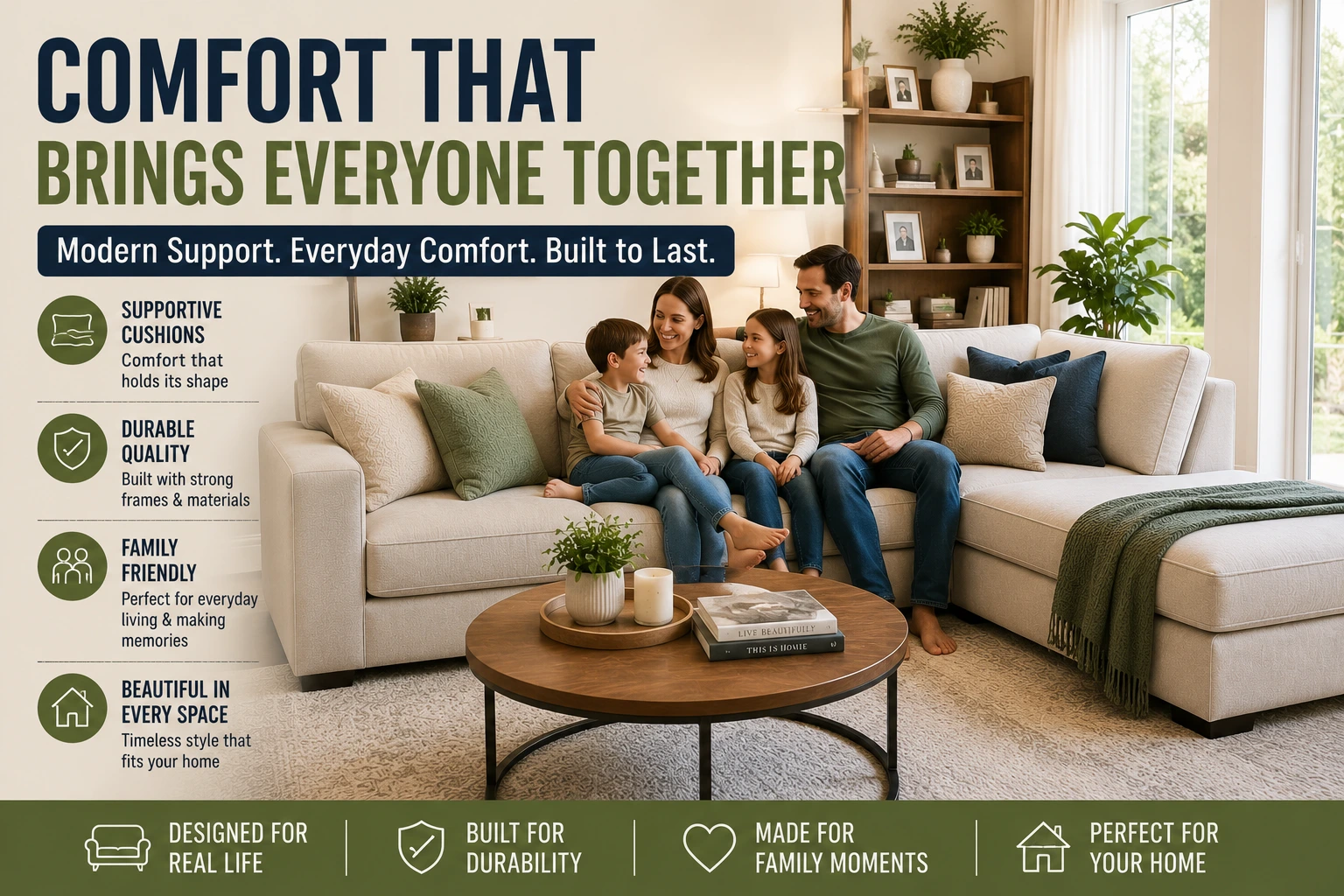
Modern supportive sectional sofa inside a bright family living room with relaxed everyday styling
Best Sofa Choices for Long-Term Durability
| Lifestyle | Best Sofa Option |
|---|---|
| Homes with pets | Performance fabric |
| Long-term durability priority | High-density foam sofa |
| Luxury modern interiors | Leather sofa |
| Cozy family living | Fabric sectional |
| Heavy daily use | Durable modular sectional |
The best long-lasting sofa usually combines:
- strong frame construction
- supportive cushions
- durable upholstery
- and practical everyday comfort
Many homeowners later realize that comfort and support are usually what matter most after years of regular living.
Shoppers looking for a more budget-friendly option may also want to read our Woyomeub Sectional Sofa Review, where we cover comfort, layout flexibility, assembly, and overall value for everyday living.
Real Everyday Comfort Matters More Than Showroom Appearance
One of the biggest furniture mistakes many homeowners make is focusing too heavily on appearance during the buying process.
A sofa may look beautiful online or inside a showroom, but everyday living often changes what actually feels important over time.
In real homes:
- cushions soften
- fabrics wear
- support changes
- and comfort quality becomes much more noticeable
That’s why practical comfort and durability usually matter much more after several years of regular use begin.
The best sofa is usually the one that continues feeling supportive, comfortable, and easy to enjoy every day without constant frustration.
A sofa that still feels supportive and comfortable after years of daily use usually reflects much higher long-term quality than one that only feels impressive during the first few months.
Frequently Asked Questions
A good-quality sofa can often last between 7–15 years depending on construction quality, daily use, cushion density, and upholstery material.
Common signs include sagging cushions, weak support, creaking frames, visible upholstery wear, uneven seating, and reduced comfort.
High-quality leather sofas can last longer, but durable fabric sofas with strong construction can also remain comfortable for many years.
Sometimes supportive inserts or cushion replacements help temporarily, but severe sagging often indicates deeper foam breakdown over time.
Sofas built with strong frames, high-density foam cushions, and durable upholstery materials usually last the longest during heavy everyday use.
Minor cushion replacements or upholstery cleaning can sometimes improve comfort temporarily, but heavily sagging frames or severe support issues often make replacement the more practical long-term option.
Best Modular Sectional Sofa Deals • Best Recliner Sofa Deals • Best Sleeper Sofa Deals
View This Week’s Sofa DealsOur Thoughts
A sofa quietly affects everyday comfort much more than many people initially realize.
It’s where people relax after long days, where families spend time together, and where familiar daily routines slowly unfold over the years.
Because of that, comfort and support eventually become much more important than perfect showroom styling alone.
In our view, a good sofa should continue feeling:
- supportive
- practical
- comfortable
- and relaxing
even after years of regular everyday use.
Many homeowners only fully understand the importance of cushion quality, frame strength, and upholstery durability after living with a sofa long-term.
The best sofa usually isn’t the trendiest one online — it’s the one that still feels comfortable, dependable, and enjoyable years later.
Why Trust FurniSavings
At FurniSavings, we focus on creating practical furniture guides designed around real everyday living.
Our content is built to help readers better understand:
- sofa comfort
- durability
- upholstery materials
- family-friendly living
- furniture quality
- and practical long-term buying decisions
We understand that shopping for furniture online can sometimes feel overwhelming, especially with so many styles, materials, and design trends available today.
That’s why our goal is to simplify the process with content that feels:
- practical
- realistic
- easy to understand
- and genuinely useful for modern homeowners
Instead of focusing only on trends, we prioritize comfort, durability, functionality, and the way furniture actually fits into real everyday life over time.

A dedicated furniture reviewer and home interiors writer with nearly a decade of experience evaluating sofas, bedroom sets, outdoor furniture, and storage solutions. Has reviewed 200+ products from brands including Ashley, Yitahome, and Amazon’s top sellers, helping thousands of U.S. homeowners make smarter buying decisions.