Last Updated: August 2026
Summary: The right sofa balances three things — comfort, realistic sizing, and fabric durability. Measure your space (including doorways and stairwells) before falling in love with a style, match your fabric to your household (kids, pets, daily use), and prioritize frame and cushion quality over trendy looks. Full guide, comparison tables, and a free seating calculator below.
🎧 LISTEN TO THIS GUIDE
~90 sec listen
Buying a sofa should feel exciting — it’s usually the piece of furniture people use most, the place where families gather, movie nights happen, and guests sit down to talk. But once you actually start shopping, it gets confusing fast: modular sofas, sectionals, recliners, cloud couches, endless fabric options, and hundreds of styles that all start to blur together.
Looking for current deals before you buy? Check our Best Amazon Sofa Deals page for sectionals, modular couches, recliners, and sleeper sofas on sale right now.
Buying the right sofa in 2026 isn’t just about appearance anymore — comfort, durability, and how well it fits real daily life matter just as much. This guide covers:
- Sofa types and which fits your space
- Materials and durability
- Sizing and layout tips
- What works best for pets and families
- Common buying mistakes to avoid
The Sofa Buying Essentials (2026)
Buying a sofa is a major investment. Don’t choose based on aesthetics alone. Our 2026 guide proves that long-term comfort, realistic sizing, and fabric durability are the three pillars of a sofa you’ll love for years.
Before you buy, ask yourself:
- ✅ Lifestyle Match: Does this fabric handle my kids, pets, or daily traffic?
- ✅ The “Size Test”: Have I measured not just the room, but the delivery path (doorways/elevators)?
- ✅ Purpose: Is this for formal hosting or relaxed, deep-seat lounging?
Why Sofa Buying Is Changing in 2026
Living rooms are becoming more comfort-focused and apartment-friendly. Instead of large formal sofas, buyers are prioritizing modular layouts, deep seating, warm neutral fabrics, and furniture that works harder for the space it takes up.
Today’s buyers care most about:
- Modular flexibility
- Apartment-friendly sizing
- Comfort-focused layouts
- Visually lighter furniture
- Warm, neutral interiors
Related: Modern Sectional Sofa Ideas · Warm Neutral Living Room Ideas 2026
Who This Guide Is For
- First-time sofa buyers
- Apartment owners trying to save space
- Families with kids or pets
- Homeowners redesigning a living room
- Anyone comparing modular vs. sectional sofas

Best Types of Sofas for Comfort, Space, and Everyday Living
Not every sofa works for every home — some people need space-saving apartment seating, others want an oversized sectional for movie nights. Here’s how the main categories break down.
Modular Sofas
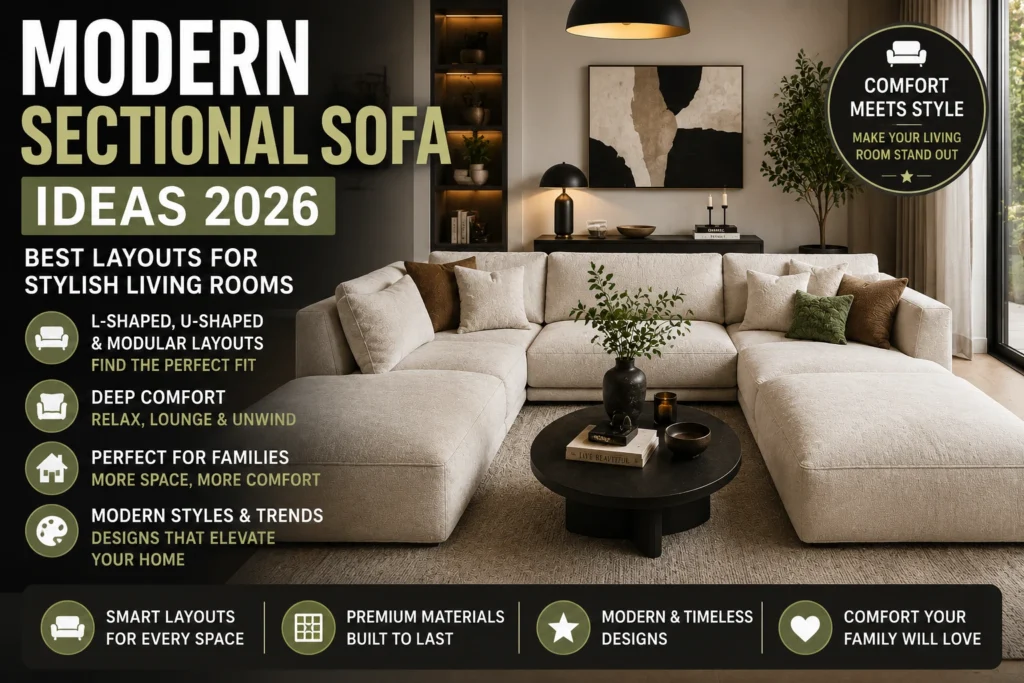
Modular sofas use separate seating units you can rearrange as your space or needs change. That flexibility has made them increasingly popular, especially for renters and anyone who expects their layout to change over time.
For deeper buying advice, see our Best Modular Sofas for Apartments 2026 guide. If you want a compact U-shaped layout specifically, our Best Modular Sectional Sofa U-Shaped 2026 Review Guide covers space-efficient configurations that still deliver real seating capacity.
Related: Modular Furniture Trends 2026
Sectional Sofas
Sectionals are ideal for larger seating capacity and cozy corner layouts — in busy family homes, a sectional often becomes the default gathering spot for movie nights and guests.
If you’re considering a larger layout, our Modern Sectional Sofa guide explains the best styles for contemporary living rooms. One common regret: buying an oversized sectional without measuring walking space and doorway access first — our Sectional Sofa Measurement Guide walks through exactly how to avoid that mistake.
Recliner Sofas
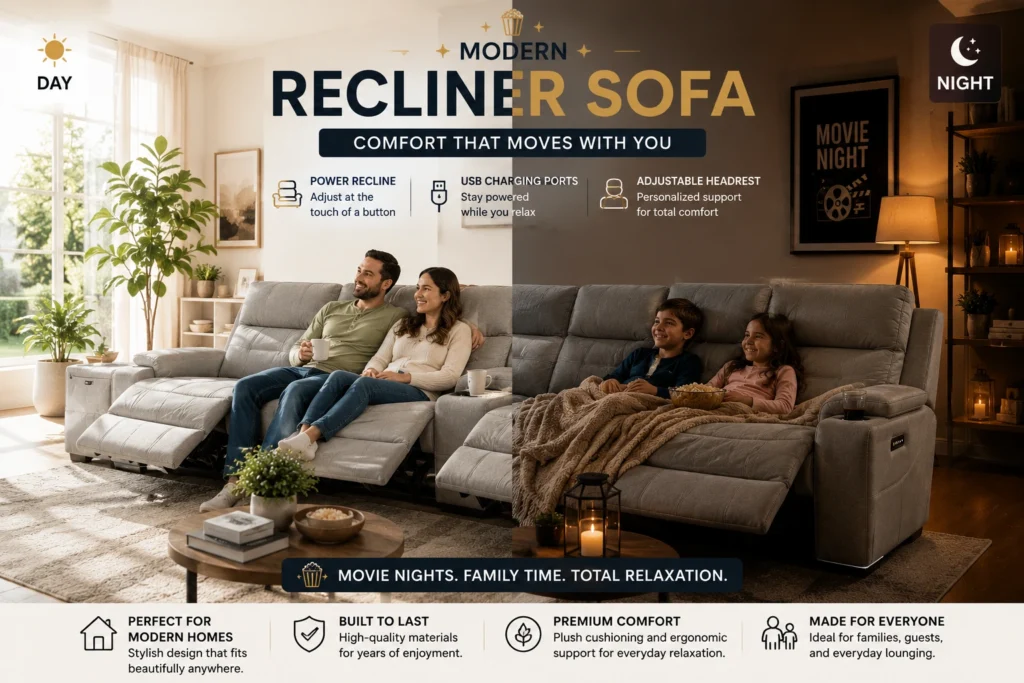
Recliners have shifted a lot — modern versions now combine power reclining, adjustable headrests, memory foam, and hidden USB charging, without the bulky, dated look older recliners had. They’ve become especially popular for people working remotely or spending more hours at home.
See our Modern Power Recliner Review for how these features actually perform in real homes. Related: Are Recliner Sofas Still Modern in 2026? · Recliner Sofa Trends 2026
A convertible futon sofa bed is worth considering too — ideal for apartments, guest rooms, or any multipurpose space where you need everyday seating that can convert to a bed when needed. See Current Sleeper Sofa Deals →

Best Sofa Types for Different Homes
| Home Type | Works Best With |
|---|---|
| Apartments | Modular sectionals, low-profile seating, storage ottomans |
| Families | Durable performance fabric, deep seating, washable covers |
| Small living rooms | Raised-leg sofas, neutral upholstery, visually lighter furniture |
| Modern interiors | Curved sofas, cloud couches, bouclé upholstery, warm neutrals |
Related: Furniture Ideas for Small Spaces 2026 · Make Small Living Room Look Bigger 2026 · Best Sofa Colors for Small Living Rooms 2026

Sofa Seating Calculator
How many people do you need to seat comfortably?
How to Choose the Right Sofa Size
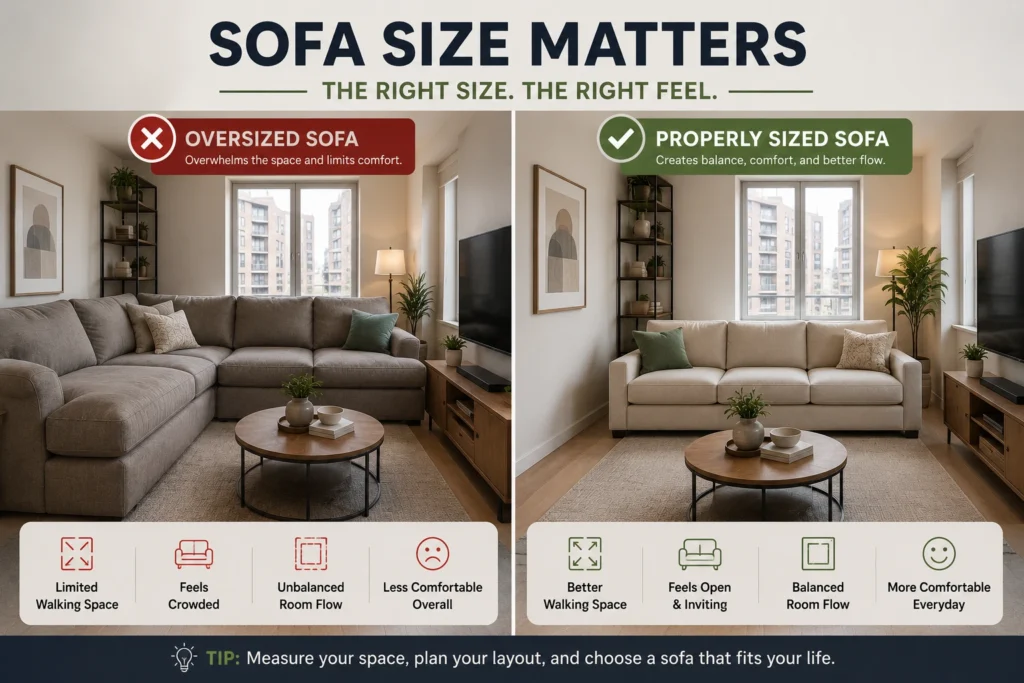
One of the most common furniture mistakes is buying the wrong size — a sofa that looks great online can feel completely overwhelming once it’s actually in the room.
Before buying, always measure:
- Room dimensions
- Hallway width, staircases, and elevators
- Doorway clearance
- Walking space around the furniture once it’s placed
Quick reference — what “34-inch deep” actually means: A 34-inch depth is standard-to-shallow, good for upright seating and posture. Deeper “sink-in” sofas (40+ inches) are popular for lounging but take up more real floor space — a 34-inch depth is often the more practical call for apartments or formal seating areas.
Our Best Sofa for Small Apartments guide covers compact sizing specifically for smaller living spaces.
Recommended Sofa Sizes by Room Type
| Room Type | Recommended Sofa | Size Range | Ideal For |
|---|---|---|---|
| Small Apartment | Compact modular sofa | 72–84″ | Small spaces, renters |
| Medium Living Room | Standard sectional | 84–108″ | Everyday family living |
| Large Open Living Room | U-shaped sectional | 108″+ | Large families, entertaining |
| Studio Apartment | Loveseat or compact sectional | 60–72″ | Space-saving layouts |
| Home Theater Room | Recliner sectional | 90–120″ | Movie nights, comfort |
Choosing the Right Sofa for Your Lifestyle
For homes with pets, kids, or heavy daily use, fabric durability usually matters more than anything else after the first few months of ownership. See our Best Sofa Fabric for Pets and Kids guide for practical options built for real family living.
Sofa material also affects daily comfort more than most people expect going in — pet hair, spills, warmth, and maintenance all factor in. Our Leather vs Fabric Sofa Comparison Guide breaks down which material fits which lifestyle.
Sofa color matters more than it seems too, especially in compact spaces — lighter, softer tones tend to make smaller rooms feel calmer and more open. See our Best Sofa Colors for Small Living Rooms 2026 guide.
Best Sofa Materials for Comfort, Durability, and Easy Maintenance
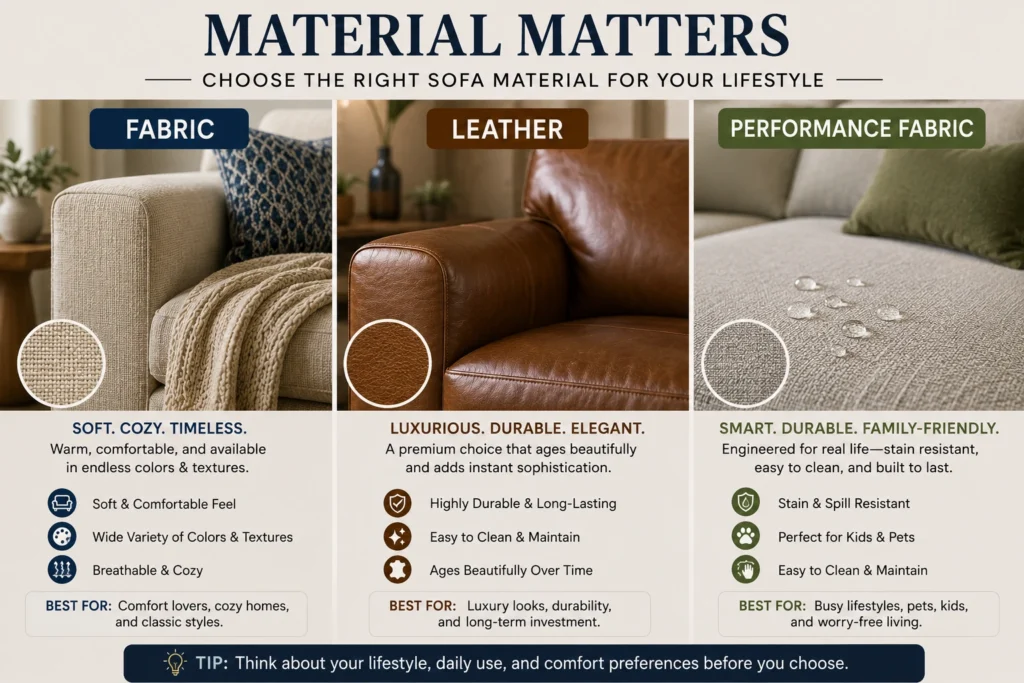
Material affects far more than looks — it changes comfort, maintenance, durability, stain resistance, and how the sofa ages.
Fabric Sofas feel soft, warm, and welcoming — a natural fit for cozy family rooms and budget-friendly spaces. Some fabrics collect pet hair or stain more easily than others, which is where performance fabrics come in.
Leather Sofas offer a timeless, premium look, are easier to wipe clean, and tend to age well. They’re a tougher fit for homes with very active pets, buyers who prefer softer textures, or very hot climates where leather can feel warm and sticky.
Fabric vs Leather Comparison
| Feature | Fabric | Leather |
|---|---|---|
| Comfort feel | Soft and cozy | Smooth and supportive |
| Maintenance | Moderate | Easier cleaning |
| Pet friendliness | Depends on fabric | Can scratch easily |
| Style | Warm and casual | Modern and premium |
| Best for | Family homes | Luxury interiors |
Performance fabrics are one of the biggest 2026 trends — engineered to resist stains, moisture, scratches, and heavy daily wear, making them a strong pick for homes with kids or pets.
Best Sofa Fabrics Compared
| Material | Comfort | Durability | Pet Friendly | Maintenance |
|---|---|---|---|---|
| Performance Fabric | High | High | Excellent | Easy |
| Bouclé | Very High | Medium | Low | Medium |
| Linen Blend | High | Medium | Low | Medium |
| Leather | Medium | Excellent | Good | Easy |
| Velvet | Very High | Medium | Low | Hard |
Cushion Filling and Everyday Comfort
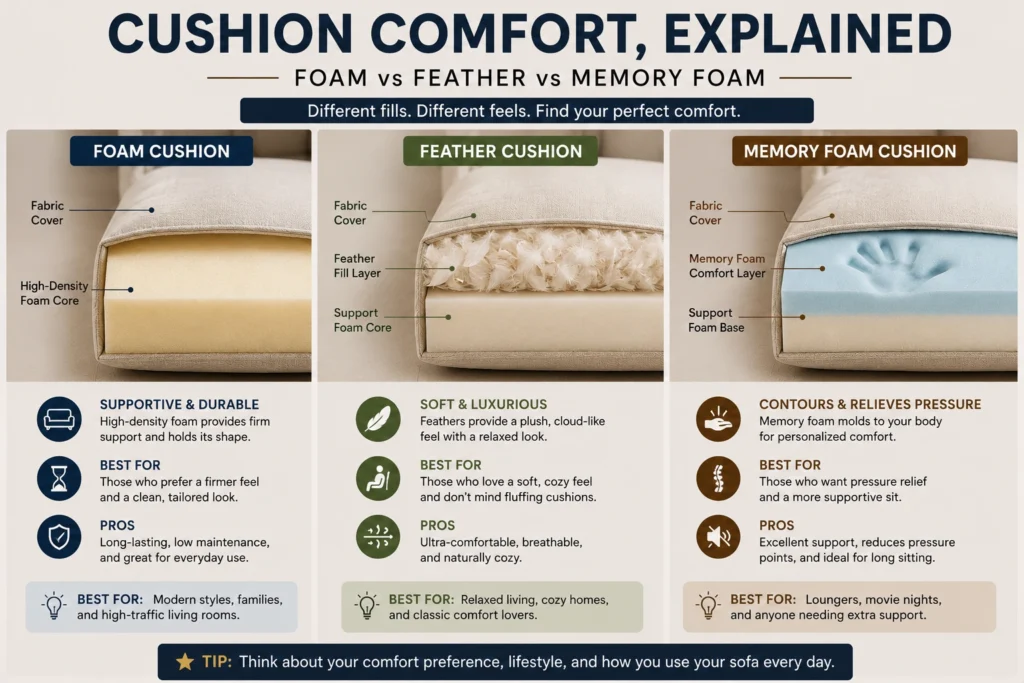
Comfort is personal — some people want soft, sink-in cushions for movie nights, others prefer firmer support that holds its shape. Cushion fill is what actually determines that.
| Cushion Type | Feel | Durability | Maintenance | Best For |
|---|---|---|---|---|
| High-Density Foam | Balanced, supportive | Excellent | Low | Everyday family use |
| Feather Down | Soft, sink-in | Moderate | High | Luxury, relaxed seating |
| Memory Foam | Pressure-relieving | Very Good | Moderate | Long sitting sessions, recliners |
High-density foam offers the best balance of support and durability for daily use — usually the safest default choice.
Feather down creates that plush “cloud couch” feel, but needs regular fluffing to keep its shape.
Memory foam is increasingly popular for pressure relief during long sitting sessions, especially in recliners.
Want that “sink-in” cloud couch feeling? Look for feather-down or high-quality memory foam fills. Just know these need more regular fluffing than firm, high-density foam.
Are down-filled sectionals worth it? They’re genuinely luxurious for lounging, but higher-maintenance — they need regular plumping to avoid looking flat, and work better in adult-focused living rooms than high-traffic homes with young kids or pets.
What Makes a Sofa Actually Last
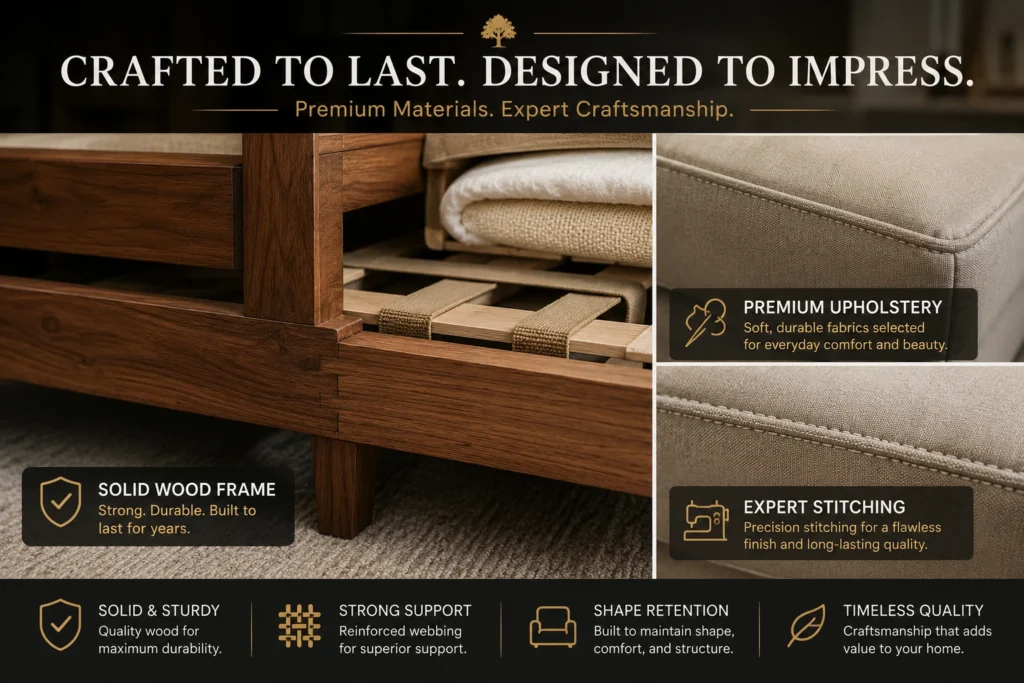
The biggest factors are frame construction, upholstery quality, and cushion support — not how the sofa looks on day one. Cheap sofas sag or lose shape far faster than expected.
Our How Long Should a Good Sofa Last? guide covers common signs of wear and when it’s time to replace, and our Sofa Lifespan Guide breaks down how different materials age over real years of use.
Signs a sofa won’t last:
- Cushions flattening quickly
- Weak frame movement or wobbling
- Thin upholstery fabric
- Uneven stitching
- Sagging seat support
- Low-density foam that loses shape easily
Best Sofa Frame Materials
| Material | Durability |
|---|---|
| Kiln-dried hardwood | Excellent |
| Solid wood | Very Good |
| Metal frame | Good |
| Particle board | Poor |
What Sofa Sales Tactics Should You Ignore?
Big discounts and luxury-sounding descriptions don’t confirm quality. Some heavily promoted sofas prioritize appearance and low pricing while cutting corners on frame strength, cushion support, or warranty coverage. Before a discount influences your decision, check these:
- Artificial list prices: A big percentage discount may be based on an inflated reference price, not the sofa’s real normal price.
- Luxury terminology: Words like “premium,” “cloud-like,” or “designer-inspired” don’t confirm actual frame, foam, or fabric quality.
- Urgency messages: Countdown timers and “only a few left” notices shouldn’t replace real research.
- Appearance-only reviews: Look for reviews discussing sagging, fabric wear, and ownership after months — not just how it looked on delivery day.
- Unclear warranties: Check exactly what’s covered, for how long, and whether return shipping fees apply.
Common Sofa Buying Mistakes
- Buying an oversized sectional without measuring walking space
- Ignoring seat depth
- Choosing style over comfort
- Overcrowding a small room
- Ignoring fabric durability for your household
- Forgetting to check delivery path measurements
- Chasing trends without long-term comfort in mind
What Many Buyers Regret Later
- Oversized sectionals that overwhelm smaller rooms
- Trendy colors that become harder to style over time
- Fabrics that turned out to be difficult to clean
- Cushions losing support faster than expected
- Seat depth that felt uncomfortable after long use
Popular Sofa Brands in 2026
Buyers frequently compare: Lovesac, Burrow, Albany Park, Honbay, Furmax, and Belffin — all popular for modular seating and apartment-friendly sectionals.
Luxury & Designer Furniture
If you’re considering premium furniture, our Sohnne Review covers product quality, warranty, and whether the brand is worth it in 2026. If you’re newer to buying from online furniture brands generally, Is Sohnne Legit? explains how to vet a retailer before ordering. For more picks from the brand, see our Best Sohnne Furniture roundup.
Regional Buying Differences
Sofa buying habits vary a lot by region — Saudi homeowners, for example, often prioritize custom furniture and majlis-style seating for large family gatherings. Our Saudi Arabia vs USA Sofa Buying comparison covers the key differences.
Scandinavian & Premium Modular Options
For buyers considering premium Scandinavian modular furniture, our Hay Mags Soft Modular Sofa Review and HAY Quilton Sofa Review both cover comfort, flexibility, and long-term ownership. If you’re deciding between HAY’s own lineup, see our Hay Mags Soft vs Regular Mags comparison.
HAY and Lovesac remain two of the most-discussed premium modular brands — our Hay Mags vs Lovesac comparison covers which offers better comfort and long-term value. If neither is quite right, our Best HAY Mags Alternatives guide covers comparable options.
Best Modular Sectional Sofa Deals • Best Recliner Sofa Deals • Best Sleeper Sofa Deals
View This Week’s Sofa DealsFrequently Asked Questions
Modular sofas and compact sectionals are usually the best options because they maximize seating without overwhelming smaller spaces.
Performance fabrics and leather are generally the easiest materials to maintain for everyday use.
Before buying a sofa, prioritize comfort, room size, durability, and how the sofa fits your daily lifestyle. A sofa should not only match your design style but also provide long-term support, practical seating space, and materials that suit your household needs.
A good mid-range or premium sofa can often last between 7–15 years depending on materials, maintenance, and daily usage.
Lighter shades like cream, beige, warm neutrals, and soft gray usually help smaller spaces feel brighter and more open.
Sofa Buying Checklist Before You Order
Measuring your space is the single most important step. Use our free Sofa Size Calculator to instantly see which widths and styles fit your room.
- Measure your room carefully
- Check doorway and staircase clearance
- Choose fabric based on pets or kids
- Compare seat depth and cushion support
- Review frame quality and stitching
- Prioritize long-term comfort over trends
- Think ahead to future layout changes
- Check cleaning and maintenance needs
Best Budget Sofas
Looking for comfort without overspending? We compared the Best Soft Sofas Under $300, including deep-seat options and compact apartment couches that punch above their price point.
Biggest Sofa Trends in 2026
Cloud couches, deep seating, curved silhouettes, bouclé upholstery, warm neutral fabrics, low-profile seating, and performance fabrics — buyers are prioritizing comfort and flexibility over formal, traditional styling.
Related Sofa Buying Guides
Best Modular Sofas for Apartments 2026 · Best Cloud Couch Dupes 2026 · Best Sofas for Small Living Rooms · Furmax U-Shaped Sectional Review · Honbay Modular Sofa Review · SoftSpot Modular Sofa Review · Modular Furniture Trends 2026 · Living Room Furniture Trends 2026
Our Take
The best sofa isn’t the most expensive or the trendiest one online — it’s the one that genuinely fits your life. It should feel comfortable after long days, work with your space, hold up to everyday use, and still feel inviting years from now.
Whether you land on a modular sectional, a cozy recliner, or a compact apartment sofa, understanding materials, sizing, and build quality upfront is what makes the difference between a purchase you’re happy with and one you regret in a year.
Compare Current Sofa Deals
Best Modular Sectional Sofa Deals • Best Recliner Sofa Deals • Best Sleeper Sofa Deals
Why Trust FurniSavings
We research furniture trends, materials, and real living-room layouts to help readers choose furniture that fits actual daily life — not just what looks good in a photo. Our guides focus on comfort, durability, functionality, and practical buying decisions for modern homes.

A dedicated furniture reviewer and home interiors writer with nearly a decade of experience evaluating sofas, bedroom sets, outdoor furniture, and storage solutions. Has reviewed 200+ products from brands including Ashley, Yitahome, and Amazon’s top sellers, helping thousands of U.S. homeowners make smarter buying decisions.