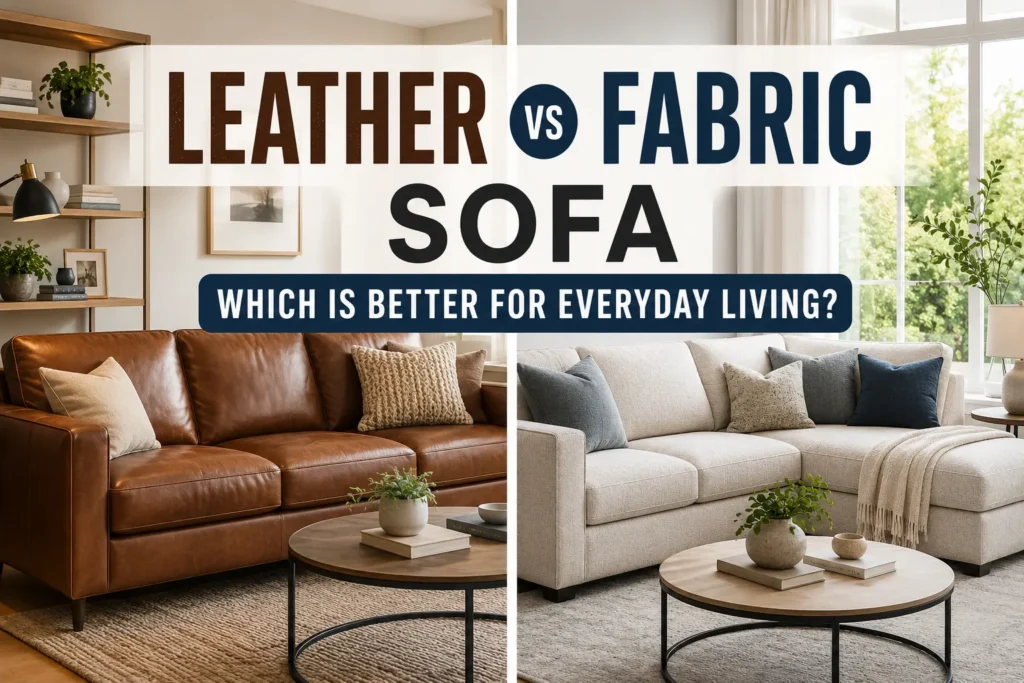
Leather or fabric? It’s one of the first real decisions in buying a sofa, and it matters more than it seems — you’ll be living with this choice every day for years.
Shopping this fall? Black Friday 2026 falls on November 27. See our Black Friday Sofa Deals 2026 guide for what to expect on sectionals, sleepers and recliners.
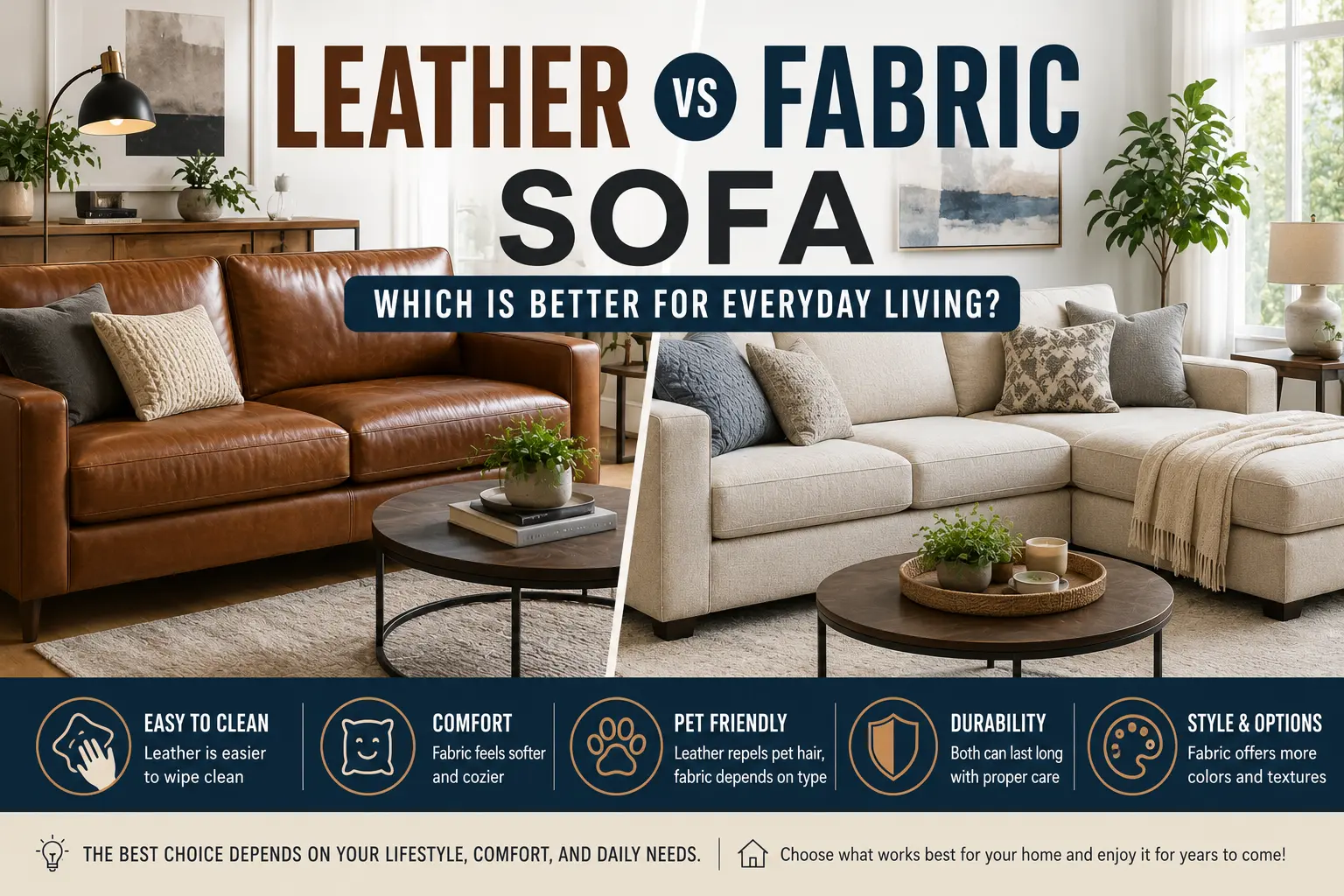
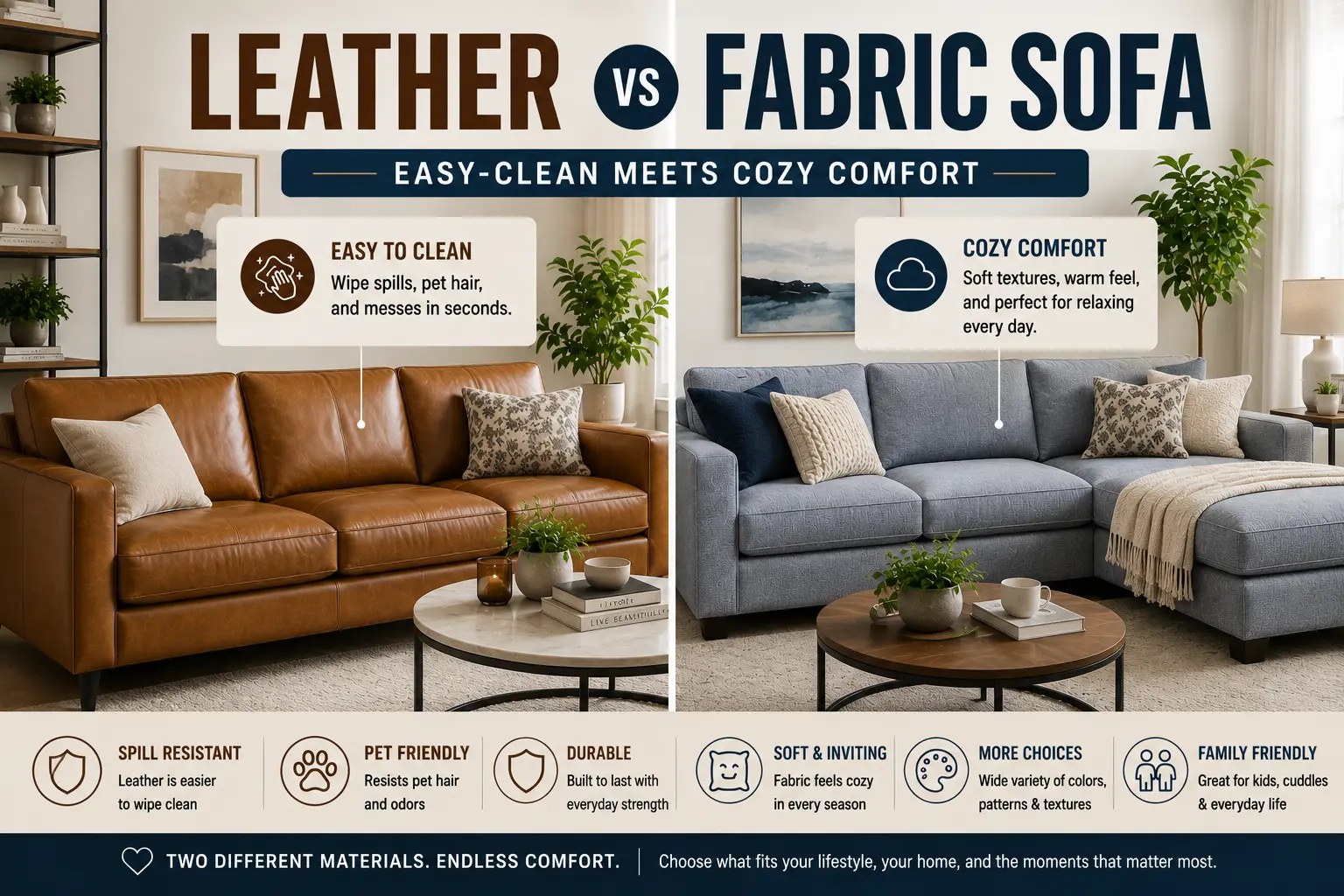
Summary: Leather is easier to wipe clean and holds up better against pet hair, making it a strong pick for busy households and warmer climates. Fabric feels softer and warmer against the skin, offers far more color/texture choices, and is usually the better fit for families who prioritize cozy, everyday comfort over low-maintenance cleaning. Full comparison, FAQs, and what buyers regret later below.
🎧 LISTEN TO THIS GUIDE
~90 sec listen
Who This Guide Is For
- First-time sofa buyers deciding between materials
- Apartment owners weighing visual weight and space
- Families with kids figuring out what will survive daily use
- Pet owners worried about hair, scratches, or accidents
- Anyone comparing long-term comfort against long-term maintenance
For a broader look at sofa sizing, layouts, and buying tips beyond just material, see our Ultimate Sofa Buying Guide 2026.
If you’re furnishing a smaller space, material also affects how “heavy” a sofa feels visually in the room — our Best Sofa for Small Apartments guide covers which styles work best. And since color and upholstery often interact more than people expect, our Best Sofa Colors for Small Living Rooms 2026 guide is worth a look too.
Why This Decision Matters More Than It Seems
A sofa gets used daily — sitting, spills, pets jumping up, late-night snacks, guests. Because of that, how a material performs after six months matters far more than how it looked in a showroom photo.
Most people pick based on style or how soft it felt in the first five minutes. The regret, when it happens, usually shows up later: leather feeling colder than expected in winter, fabric holding onto pet hair, or a stain that won’t fully come out.

Leather Sofa: Pros
- Fast, easy cleanup. Spills wipe off with a damp cloth in seconds — no deep cleaning required for most everyday messes.
- Resists pet hair. Hair sits on top of the surface instead of working into fibers, so it’s easier to remove.
- Ages well. Genuine leather develops a patina over time — a softened, slightly worn look that most owners find adds character rather than making it look old.
- Fits modern spaces. Clean lines and a smooth surface work especially well in minimal, open-concept, or contemporary living rooms.
Leather Sofa: Cons
- Temperature-sensitive. Leather can feel noticeably cold when you first sit down in winter, and can feel warm or slightly tacky in direct summer sun.
- Shows scratches. Claw marks from active pets are more visible on leather than on most woven fabrics.
- Visually heavier in small rooms. A large dark leather sectional can dominate a smaller space more than an equivalent fabric piece would.
- Bonded vs. full-grain matters. Lower-cost “bonded” or “faux” leather wears and cracks faster than full-grain or top-grain leather — worth checking which type you’re actually buying.
How Material Feels Across Seasons
Leather runs cooler to the touch in winter and can feel warm-to-sticky in direct summer sun, especially near large windows. Fabric stays closer to room temperature year-round, which is part of why it tends to feel “cozier” for everyday lounging regardless of season.
Fabric Sofa: Pros
- Softer, warmer feel. Fabric is the more comfortable option for long lounging sessions, movie nights, or curling up under a blanket.
- Far more design choice. Color, pattern, and texture options are essentially unlimited compared to leather’s more limited palette.
- Performance fabrics have improved a lot. Materials like Crypton, Sunbrella, and other tightly-woven performance polyesters now offer real stain resistance and pet-friendly durability without giving up softness.
See our Best Sofa Fabric for Pets and Kids guide for specific fabric recommendations if durability is your top concern.
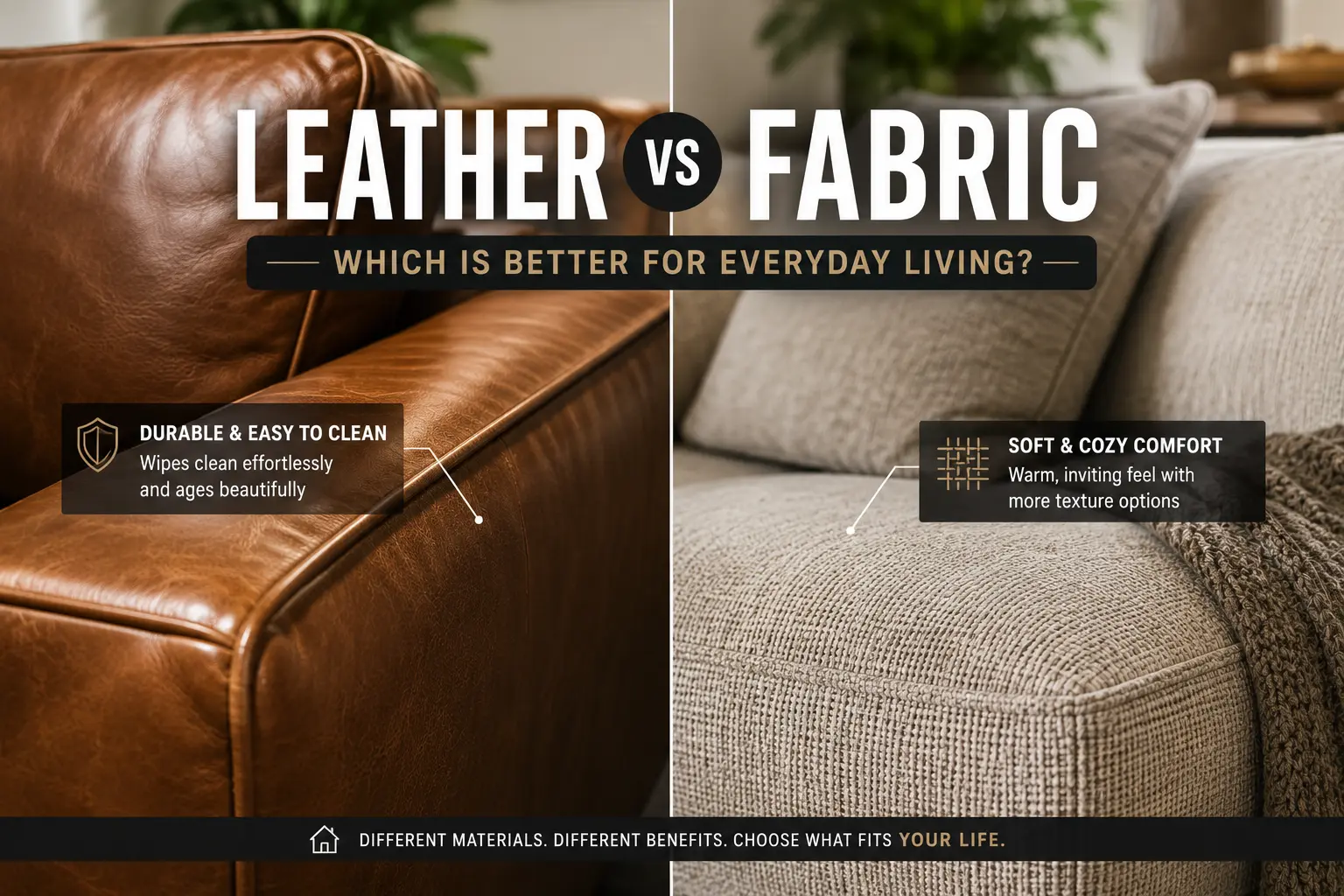
Close-up comparison of leather sofa texture and soft woven fabric upholstery
Fabric Sofa: Cons
- More maintenance overall. Pet hair works into the weave rather than sitting on top, and stains often need more than a quick wipe.
- Odor absorption. Fabric holds onto smells more than leather — cooking smells, pet odor, etc.
- Lower-quality fabric wears faster. Cheaper weaves can flatten, pill, or show wear in high-traffic spots within a year or two.
- Light colors show stains fastest. If you have kids or pets, a mid-to-dark tone or a patterned fabric will hide wear far better than a light solid.
Fabric quality varies enormously by construction, not just material name — our Signs of a Low-Quality Sofa guide covers what to check before buying, regardless of which material you choose.
Leather vs Fabric: Side-by-Side Comparison
| Feature | Leather | Fabric |
|---|---|---|
| Cleaning | Wipes clean in seconds | Needs spot cleaning or vacuuming; deeper stains may need a cleaner |
| Comfort | Smooth, firmer initial feel; softens with age | Softer immediately; warmer to the touch |
| Pet hair | Sits on surface, easy to remove | Works into weave, harder to fully remove |
| Temperature | Cooler in winter, can feel warm/sticky in summer sun | Stays closer to room temperature year-round |
| Typical lifespan | Often 15–20+ years for full-grain leather with care | Often 7–12 years, longer with high-quality performance fabric |
| Scratch resistance | Visible marks from claws/sharp objects | Better resistance with tightly-woven fabrics |
| Design variety | Limited — mostly neutral tones | Extensive — colors, patterns, textures |
| Best for | Low-maintenance households, warmer climates, modern decor | Families prioritizing comfort, colder climates, varied decor styles |
Lifespan figures are general industry ranges and vary significantly based on quality, frame construction, and daily use.
Which Material Is Better for Families?
For most families, fabric wins on day-to-day comfort — kids climb on it, nap on it, and spend hours on it, and the softer surface tends to hold up better for that kind of use than leather’s firmer feel.
That said, if cleaning is your bigger concern than softness, a tightly-woven performance fabric or leather will save you real time over the years. The right call depends on which trade-off — comfort or cleanup — matters more in your household.
Which Is Easier to Clean?
Leather wins here in most everyday scenarios — spills and pet hair both come off faster and with less effort. Modern performance fabrics have closed some of that gap with real stain resistance, but they still generally require more active maintenance than a quick wipe-down.
Which Lasts Longer?
Full-grain leather, properly cared for, often lasts 15–20 years or more. Fabric sofas typically run shorter — often 7–12 years — though a well-built fabric sofa with a solid hardwood frame and high-density foam can easily outlast a poorly made leather one. Construction quality (frame, cushion fill, stitching) usually matters more than material alone.
For more on evaluating build quality specifically, see our How to Measure for a Sectional Sofa and How Long Should a Good Sofa Last? guides.
What Buyers Regret Later
The same handful of regrets come up again and again once people have lived with their sofa for a year or more:
- Choosing a light fabric color without factoring in stains
- Buying a large, dark leather sectional that feels too heavy for the room
- Prioritizing how it looked online over how it would actually hold up
- Picking a lower-quality material that started showing wear within months
The honest pattern: the best sofa isn’t the one that photographed best — it’s the one that’s still comfortable and easy to live with a year later.
Best Material by Lifestyle
| Lifestyle | Best Option |
|---|---|
| Homes with pets | Performance fabric or leather |
| Luxury/modern spaces | Leather |
| Cozy family rooms | Fabric |
| Cleaning is the top priority | Leather |
| Apartment living | Fabric sectional (visually lighter) |
| Warm, relaxed aesthetic | Fabric |
| Minimal/contemporary interiors | Leather |
Budget-conscious shoppers can also check our Woyomeub Sectional Sofa Review for a lower-cost option that covers comfort, layout flexibility, and assembly.
Climate Considerations
Climate genuinely affects which material makes more sense — leather runs cooler and can feel more comfortable in consistently warm regions, while fabric’s insulating quality is more forgiving in colder climates. Our Saudi Arabia vs USA Sofa Buying guide breaks down how weather and regional preferences shape material choice.
Choosing a Premium Option
If you’re shopping at the higher end, our Sohnne Review covers a premium brand offering both fabric and leather upholstery, including whether it’s a trustworthy, legitimate option worth the price. For more everyday premium picks, see our Best Sohnne Furniture roundup.
You can also see both materials in action in our Modern Power Recliner Review, where we cover comfort and maintenance side by side.
Frequently Asked Questions
Performance fabrics and tightly woven upholstery usually resist scratches better, while leather is often easier to wipe clean and remove pet hair from.
Both leather and fabric sofas can last many years if built with quality frames, durable cushions, and strong upholstery materials.
Not always. Leather is often easier to wipe clean, but it may require occasional conditioning depending on the material quality.
Fabric upholstery can absorb stains and odors more easily, especially lower-quality materials without stain resistance.
Many homeowners find fabric sofas warmer and cozier for everyday relaxation, while others prefer the smoother support of leather seating.
Performance fabrics and tightly woven upholstery are often easier for busy family homes because they resist stains, scratches, and daily wear more effectively. Leather can also work well for easier wipe-clean maintenance depending on the household lifestyle.
Best Modular Sectional Sofa Deals • Best Recliner Sofa Deals • Best Sleeper Sofa Deals
View This Week’s Sofa DealsOur Take
There isn’t one universally “better” material — the right choice depends on your household, not a general rule. If you want the lowest-maintenance option and don’t mind a firmer, cooler surface, leather is usually the better long-term bet. If comfort and everyday coziness matter more to you than easy cleanup, fabric — especially a good performance fabric — is very likely going to make you happier.
The best sofa is the one that still feels good to sit on a year from now, not the one that looked best in a photo before you bought it.
If you’re shopping for a large modular sectional, upholstery choice matters even more given the size of the investment — worth reading through this guide fully before deciding.
If you’re shopping for a large modular U-shaped sofa & Soft fabric sofas under $300 choosing the right upholstery material becomes even more important for long-term durability.
Why Trust FurniSavings
We build practical furniture guides based on real buying considerations — comfort, durability, maintenance, and how furniture actually holds up over daily use, not just how it looks in a photo. Our goal is straightforward, useful content that helps you make a decision you won’t regret in a year.

Nayyar SK writes and updates the furniture reviews and buying guides on FurniSavings, covering sofas, bedroom sets, outdoor furniture and storage. Reviews are research-based, using product specs, verified-buyer reviews and current prices. See how we review furniture.